Cranes · Cranes and rails
Common Crane
Link copied.
Grus grus
Link copied.
Voice
Call
Call
Call
How to recognize it
-
Body length 100–130 cm
-
Slate-grey plumage, black wing tips
-
Black front of the head, bare red crown, white stripe from the eyes along the neck
-
Loud trumpeting call; migrating flocks fly in a V
About the species
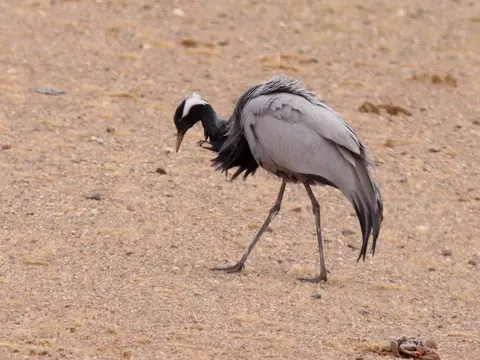
Across its slate-grey body, the Common Crane has a blackish forehead and a bare red patch on the crown. A white stripe sweeps from behind each eye toward the upper back, while the wing tips are black and the long legs trail behind in flight. Its pale breast contrasts with the darker back.
Its loud call sounds like a trumpet and carries across open country, especially when flocks pass overhead in a V. Pairs leap with wings raised and bow during spring displays; around the nest, adults may stain their feathers with mud or decaying plants, helping them blend into their surroundings.
It breeds in quiet wetlands, bogs and marshy openings in forest, then moves south for winter. It probes in fields and shallow water for roots, seeds and other plant food, and also takes insects, worms and small animals; many European breeders winter in Spain, Portugal or North Africa.
Where to find
-
At quiet bogs with sedge or reeds in spring and summer, listen for the Common Crane pair's long, synchronized call marking a nesting territory.
-
In winter on harvested fields, look for small groups picking up leftover grain.
-
During migration over open country, scan the sky for a V-shaped flock, marked by a loud trumpeting call.