Owls
Eurasian Pygmy-Owl
Link copied.
Glaucidium passerinum
Link copied.
Voice
Song
Song
Song
How to recognize it
-
15–19 cm long; females larger than males
-
Greyish-brown upperparts with white spots, white underparts with brown streaks
-
Small, rounded head, yellow eyes, white half-collar on the nape
-
Male's call a steady series of clear, fluted notes, about 2 seconds apart
About the species
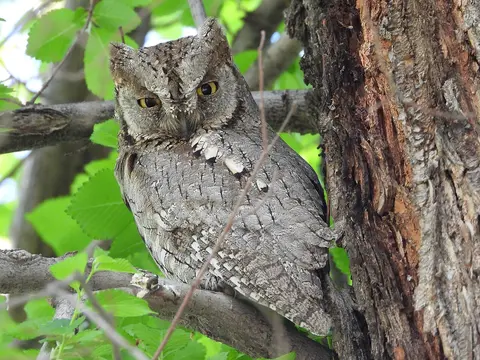
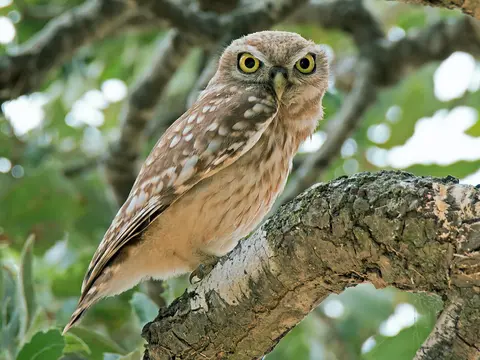
Reddish or grey-brown above, it has pale spots across its back and a white half-collar at the back of its neck. Its underside is mostly white, marked with brown flecks, while its dark tail carries narrow pale bars. Yellow eyes and short white eyebrows show on a small, rounded head, without the ear tufts seen on many owls.
It hunts around sunrise and sunset, but remains active in daylight too. Its call is a clear, high whistle, with notes spaced about two seconds apart. In autumn, it stores extra food in tree cavities for use through winter.
Look for it in northern coniferous forests and higher mountain woods, including mixed forest, often along clearings near wet ground or water. It feeds mostly on small mammals, but also takes insects and other prey. Adults usually stay in range year-round, though harsh winters may send some south, while juveniles may move in autumn or winter.
Did you know?
-
An owl that hunts in daylight
A weak facial disc and rather small eyes mark this as a crepuscular owl, not a strictly nocturnal one — and indeed, in dark spruce forests the Pygmy Owl will hunt in broad daylight.
Link copied.
Where to find
-
At the edge of a damp clearing by water in taiga or high-elevation coniferous or mixed forest, listen from February to May for the male's repeated whistle near the nesting territory — before dark, and sometimes by day on cloudy days.
-
During chick-rearing, watch for food deliveries at old woodpecker holes in conifers, birches, aspens or beeches.
-
At feeders in winter, watch for a sudden strike at tits, bullfinches or sparrows.