Treecreepers · Perching birds
Short-toed Treecreeper
Link copied.
Certhia brachydactyla
Link copied.
Voice
Call
Song
Call
How to recognize it
-
About 12 cm long
-
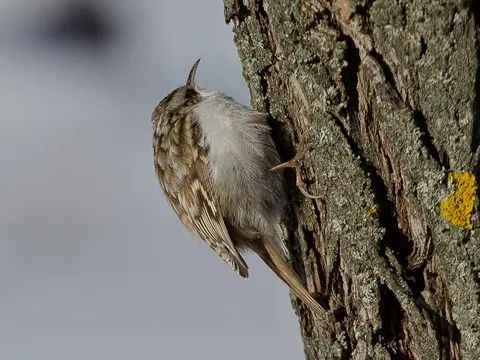
Brown back with pale streaks, whitish underside and a pale stripe behind the eye
-
Up tree trunks in short spiral hops; tail used for support
-
Repeated short call, "tyt...tyt tyt-tyt"
About the species
Against a tree trunk, its upperparts blend brown, buff, black and white, with a rufous patch at the rump; below, the plumage is pale, and the throat is distinctly whiter. A faint off-white stripe runs behind the eye, above a long bill that curves down. Males and females look alike.
It climbs trunks in short, spiraling hops, using its stiff tail and spread feet for support. At the top, it flies to the base of another tree rather than coming down headfirst. Its call repeats in sharp notes: "tyt... tyt-tyt"; the song varies from place to place.
It lives in mature deciduous woods and also uses parks and gardens with fruit trees, especially where well-grown oaks are available. It picks insects and spiders from bark, sometimes eating seeds in colder months. Most stay in the same region year-round, though some disperse beyond their usual range after breeding.
Where to find
-
In city parks with mature deciduous trees, scan the lower trunks: short, spiral hops give away a search for insects in the bark.
-
The Short-toed Treecreeper sometimes feeds on walls too — scan vertical surfaces as well as trunks.
-
In cold weather, look for sheltered gaps beneath building eaves: several may roost there in a tight, star-shaped group.