Swallows · Perching birds
Bank Swallow
Link copied.
Riparia riparia
Link copied.
Voice
Call
Alarm
Song
How to recognize it
-
Body length 12–13 cm
-
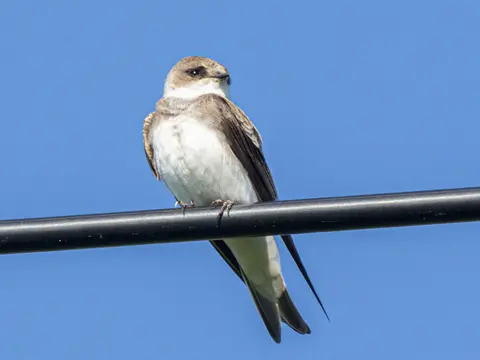
Gray-brown upperparts, white throat and underside; brown breast band
-
Fast flight usually low, often over water
-
In flight, a long twitter of low, gravelly notes
About the species
Brown above and white below, the Bank Swallow has a clear white throat set off by a brown band across the chest. Its wings look darker than its back in flight, and its narrow tail has only a slight notch at the tip. Juveniles show rusty edges on the feathers above.
It skims low over water with a quick, light flight, catching small flies and other insects on the wing. Groups chatter in a low, gravelly twitter when settled at a roost; a harsh "chrrrsh" call sounds when a predator passes. For nesting, pairs dig tunnels into steep banks of soft sand or gravel, often close together in colonies.
Look for it around rivers, lakes, and other open water, where sandy or gravelly banks—and sometimes quarry faces—offer places to nest. It leaves its northern breeding grounds for winter, heading to Africa, southern Asia, or South America.
Where to find
-
On steep riverbanks with soft soil, look for burrow holes high on the slope — during the breeding season, male Bank Swallows circle and call loudly around the entrances.
-
At large rivers and lakes, watch for low flights over the water as they first arrive in spring, searching for early flies.
-
Over open meadows near water, watch for insects being caught in flight.