Swallows · Perching birds
Barn Swallow
Link copied.
Hirundo rustica
Link copied.
Voice
Alarm
Song
Song
How to recognize it
-
Slightly larger than a sparrow, slim silhouette
-
Blue-black upperparts, pale underside
-
Adults with a rufous forehead and throat, dark breast band
-
Long, deeply forked tail; low flight over open areas
About the species
Blue-black above and pale below, the Barn Swallow has a warm reddish face and throat, with a dark blue band across its chest. In good light, the upperparts show a metallic sheen, and the adult's long outer tail feathers leave a deep fork behind it. Small white spots mark the tail, while females have shorter streamers and less glossy blue.
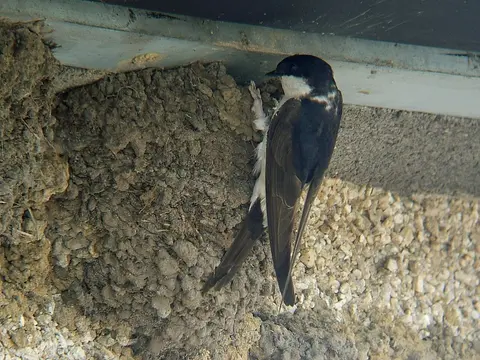
Most of its day is spent on the wing, sweeping over open ground or water to catch insects, sometimes following people, animals, or farm machinery where they stir prey up. Its song moves from a twittering warble into a rattle, and near the nest it calls "witt-witt" or gives a loud "splee-plink" to chase intruders away. Pairs build mud nests and defend the space around them, often nesting near other pairs.
Look for it over pastures, meadows, and other open ground, especially where water and buildings, bridges, or wharves offer feeding areas and nest sites. It takes flies and other insects in flight, then heads south after breeding across much of its northern range, returning in spring to nest again.
Where to find
-
In Europe, do not look for the Barn Swallow amid dense city blocks; over open pastures and meadows, watch for quick turns as it catches insects in flight.
-
Beside a shallow lake or river, watch it skim the surface and scoop up water on the wing.
-
At farms, check the beams inside barns and stables for mud-cup nests.
-
Under bridges, look for mud nests fixed to sheltered ledges.
-
Over open country, scan the wires for groups perched together.