Finches · Perching birds
Brambling
Link copied.
Fringilla montifringilla
Link copied.
Voice
Call
Call
Call
How to recognize it
-
Sparrow-sized
-
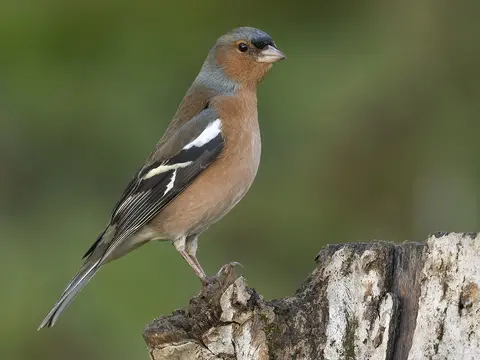
Orange breast and white belly
-
In summer, male with black head, neck and upper back; female with brown head and dark streaks
-
Sharp "chee-chee" in flight
About the species
In winter, a male brambling has a brown-and-gray head and back, an orange breast, and a white belly, while in summer his head and upper back turn black. Orange on the shoulders breaks up the darker back, and a white rump shows above the tail. Females are browner overall, with a streaked crown and a softer orange breast.
Outside the breeding season, it gathers in large flocks, sometimes numbering thousands or even millions. Its quiet, scratchy song ends in a sharp buzz; in flight, it gives clipped "chee-chee" calls, as well as a drawn-out "kewk."
It breeds in open coniferous or birch woodland across northern Europe and east through the Palearctic. It migrates south for winter, reaching southern Europe, North Africa, and parts of Asia. Summer food is mostly insects; in winter, flocks feed on seeds and may keep moving until they find beech mast.
Where to find
-
In winter in European beech woods, look for large flocks of bramblings where beech mast is plentiful; they move on until they find it.
-
In northern open birch or coniferous woodland during the breeding season, look high against trunks for nests where adults feed their young.
-
In summer in northern open birch or coniferous woodland, watch for insect feeding — insects are part of the summer diet.