Kinglets · Perching birds
Common Firecrest
Link copied.
Regulus ignicapilla
Link copied.
Voice
Call
Song
Song
How to recognize it
-
About 9 cm long
-
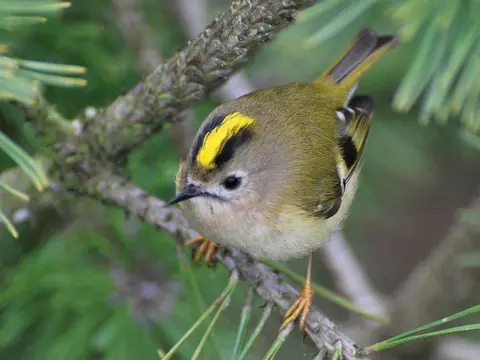
Adults: broad white eyebrow edged in black, black eye-stripe; orange crown in males, yellow in females
-
Bronze shoulder patches and two white wing bars
-
3–4 thin, high notes, "tsee-tsee-tsee"
About the species
Olive-green above and pale underneath, the Common Firecrest has bronze-toned shoulders and two white bars across its darker wings. A black stripe crosses the eye beneath a broad white eyebrow, while the crown is orange in males and yellow in females. Compared with a Goldcrest, its bold face pattern is the clearest clue.
It works through foliage in quick hops, often hovering as it searches for insects and spiders. Its contact call is a thin, high "zit-zit-zit"; the song strings similar notes into a longer, quicker phrase, and in winter it joins loose flocks of tits and warblers.
Wooded parks and large gardens suit it when they have enough trees, as do broadleaved, mixed and coniferous woods. It picks small insects, spiders and other soft-bodied invertebrates from foliage and webs. Southern populations often stay year-round, while those from central and eastern Europe move south and west for winter.
Where to find
-
In a city park or large garden with suitable trees, look for the Common Firecrest in the canopy, moving along the upper sides of branches and sometimes hovering beside leaves to catch insects.
-
In winter, check forest edges and scrub for mixed flocks of tits and warblers foraging through vegetation at different heights.
-
In broadleaf or mixed woodland in May and June, listen just after dawn for a male's brief, repeated song as he marks his breeding territory.