Sparrows · Perching birds
Eurasian Tree Sparrow
Link copied.
Passer montanus
Link copied.
Voice
Song
Alarm
Call
How to recognize it
-
12.5–14 cm long
-
Chestnut crown and nape
-
White cheeks, each with a black spot
-
Two thin white bars on dark wings
About the species
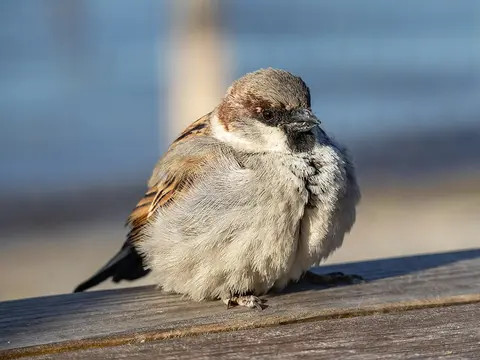
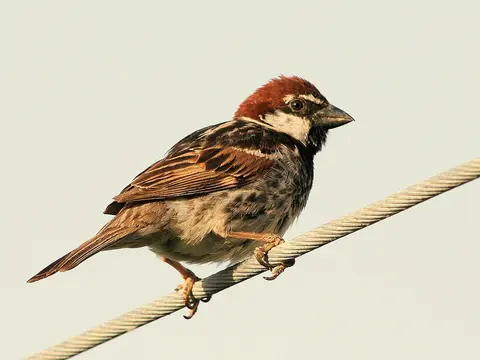
Warm brown upperparts, streaked with black, meet a pale underside beneath a chestnut crown and nape. Each white cheek has a small black spot, and two fine white bars cross the wings. A small black bib marks the throat; where it overlaps with House Sparrows, the male House Sparrow’s grey crown offers a useful contrast. Males and females look much alike.
On the ground, it moves in quick hops and searches for food in flocks, sometimes mixing with other seed-eaters. It uses short chirps in social exchanges and a harsher “teck” in flight. Unpaired or courting males may give an excited series of “tschip” calls; it has no true song.
In Europe, it is more at home in lightly wooded countryside, village gardens and open parks than in dense urban centers; in eastern Asia it also lives in cities. It picks up seeds and spilled grain from the ground, turning to insects and other small invertebrates when feeding chicks. Most populations stay in one area year-round, though northern populations move south for winter.
Did you know?
-
Squatters in sand martin tunnels
Tree Sparrows commonly raise broods inside abandoned tunnels of active Sand Martin colonies, where they are one of the most regular avian squatters alongside House Sparrows and Starlings.
Link copied.
-
Where the house sparrow gave up
In city parks where the House Sparrow no longer breeds, the Tree Sparrow readily takes over tit boxes, starling boxes, and old tree hollows — and far more often than its cousin, settles in nest boxes, cavities, and cliff burrows.
Link copied.
-
Paired for life, even in flocks
A Tree Sparrow pair forms for life, and even in the biggest roaming flocks the partners keep apart from the rest of the birds.
Link copied.
Where to find
-
In autumn, at the edge of grain fields beyond town, look for flocks of Eurasian Tree Sparrows hopping over the ground for seeds and spilled grain.
-
In spring, in small copses in open countryside, listen for a sharp, two-syllable chirp near old hollow trees.
-
Along steppe river floodplains, watch steep banks for repeated visits to old swallow burrows used as nest sites.
-
In small settlements on the outskirts, watch for repeated trips into gaps beneath roofs, where nests may be tucked away.