Sparrows · Perching birds
House Sparrow
Link copied.
Passer domesticus
Link copied.
Voice
Call
Call
Song
How to recognize it
-
14–18 cm long, compact shape, short tail
-
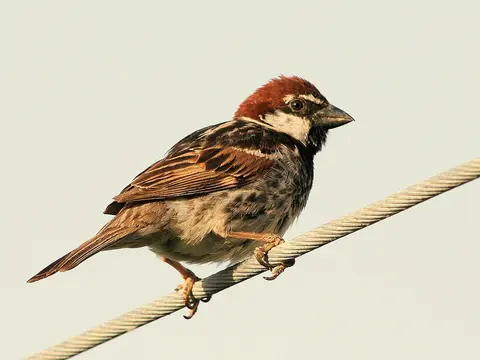
Male: dark grey crown, chestnut sides of the head, black patch on throat and chest
-
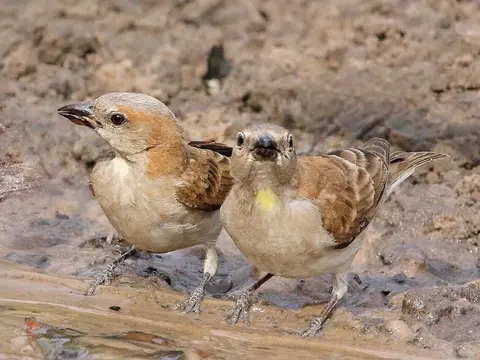
Female and young: brown-grey plumage, pale stripe above the eye
-
Frequent short chirping, "chirrup"
About the species
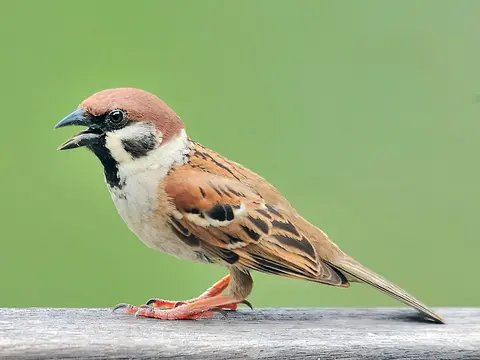
Around doorways and outdoor tables, House Sparrows show a mix of warm brown, grey and buff. The male has a grey crown, chestnut back and black patch at the throat, while the female is plainer, with brown streaking and a pale stripe above the eye. Their stout bills suit a diet of seeds, and they move in quick hops across the ground.
They keep close company, feeding in groups and gathering in shrubs to chatter before settling for the night. The usual call is a short, repeated "chirrup"; males give it rapidly beside nest sites, and groups sometimes dust-bathe together. Their calls often come from a lively gathering rather than a lone singer.
They fit readily into towns and villages, nesting in eaves, wall gaps and other sheltered cavities, as well as around farms. Adults eat seeds from grains and weeds, along with crumbs and other scraps; in spring and summer, insects become part of the diet, especially when parents feed chicks. Most stay close to where they live throughout the year, though some populations move seasonally.
Did you know?
-
How the Italian sparrow was born
Around 1600 BCE house sparrows followed humans across the Alps into Italy and interbred so persistently with Spanish sparrows that the hybrids stabilized into a separate species — the Italian sparrow.
Link copied.
-
Sparrows raised in a coal mine
A family of house sparrows lived for many generations in a coal mine hundreds of metres underground, feeding on food the miners brought down with them.
Link copied.
-
Two cents per dead sparrow
By 1889 house sparrows had multiplied so prolifically across North America that county and state authorities paid two cents per dead bird, and hunters banded together into "sparrow clubs".
Link copied.
Where to find
-
At outdoor restaurant areas, house sparrows pick crumbs and leftover food off the ground.
-
At home and public feeding stations, watch flocks feed on the food put out for them.
-
During breeding season, listen for males repeatedly chirping beside nest sites — in gaps under eaves and in walls.
-
By shrubs near communal roosts, listen for group calls before the flock settles in the evening and before it leaves in the morning.