Shrikes · Perching birds
Lesser Grey Shrike
Link copied.
Lanius minor
Link copied.
How to recognize it
-
21–24 cm long
-
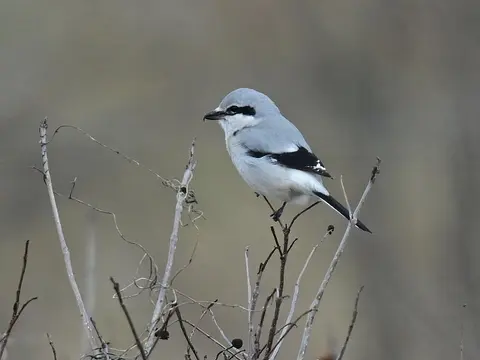
Adult male: black mask reaches across the forehead; pale grey back, white underparts with a pink flush
-
Often perches upright on wires, tail held down
-
During the breeding season, hovers over prey; flight low and undulating
About the species
The pale grey back and white underparts contrast with dark wings and a broad black mask that reaches across the forehead. The male has a faint pink wash on the lower breast and belly, while the female is duller, with a dark grey head. White patches show on the wings, and the black tail has white edges.
From a branch or wire, it scans for insects, sometimes hovering over the ground as it hunts. Its rough chatter mixes with sharp cries and whistles; the breeding song strings together trills and may include imitations of other species' calls. It only occasionally pins prey to a thorn for later.
In summer it uses dry, open landscapes with scattered trees and bushes, including field edges, roadsides, gardens and parks. Beetles, moths, butterflies and grasshoppers make up much of its insect food. It migrates to southern Africa in early autumn and returns north in spring.
Where to find
-
On telephone wires beside open fields or pastures within the breeding range, look for a still hunting perch: from there it scans for insects and may hover over prey during the breeding season.
-
In city parks within the breeding range, look to open branches among scattered trees over short grass; the lesser grey shrike scans the ground or air for insects from a perch.
-
In May and June at nesting sites, watch roadside trees for adults flying to the nest with insects for their young.