Tits · Perching birds
Marsh Tit
Link copied.
Poecile palustris
Link copied.
Voice
Call
Call
Song
How to recognize it
-
Smaller than a sparrow, compact build
-
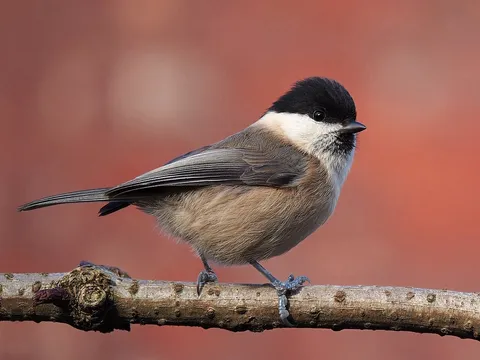
Black cap extending to the nape, pale cheeks, small patch under the bill
-
Brownish-grey back and wings, whitish underparts with a buff tinge
-
Sharp, ringing call, "pitchou"
About the species
A glossy black cap reaches down the nape, set off by pale cheeks and a small black patch beneath the bill. The back is brown, with darker grey-brown wings and tail; below, the feathers are off-white with a faint buff wash along the flanks. The dark head stands out against the lighter face.
It darts through branches and shrubs, sometimes hanging upside down by one leg. Its sharp call sounds like "pitchou," and its song can be a clear repeated "schip-schip-schip." In autumn and winter, it hides seeds in crevices and under leaf litter, then finds its caches from memory.
Look for it in mature broadleaf woods with shrubs beneath the trees, including damp woodland, riverside growth, older parks and gardens. It eats insects and spiders in warmer months, then takes seeds, nuts and berries; most stay near their territories year-round, though some northern populations move south in winter.
Where to find
-
In spring, in a city park with mature trees and dense shrubs, listen for a quick, ringing song from a high perch — a Marsh Tit may be singing.
-
In damp broadleaf woods, especially beside rivers, scan dry trunks and branches — it searches there for insects and spiders, and also forages lower in the shrub layer.
-
In winter, by a sunflower-seed feeder beside woodland, you may see it take several seeds at once and fly off to hide them in bark crevices or fallen leaves.