Herons · Pelicans and herons
Purple Heron
Link copied.
Ardea purpurea
Link copied.
Voice
Alarm
Call
Call
How to recognize it
-
Body length 78–97 cm, slightly smaller than a Grey Heron
-
Chestnut-brown plumage, gray back
-
In flight, sharply folded neck, loop extending below the belly line
About the species
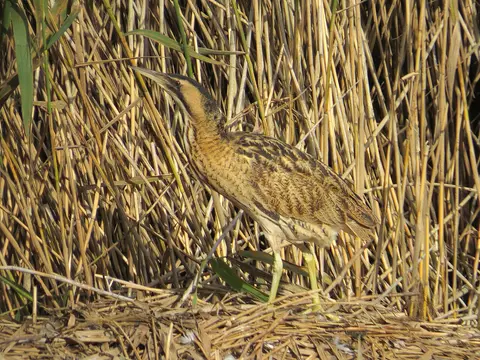
Among the reeds, the Purple Heron’s reddish chestnut body and dark grey back look darker than a Grey Heron’s. Its black crown and dark neck stripe end in a slim, dangling crest, and the sides of its long neck are streaked with dark lines. It is slightly smaller than a Grey Heron and has a long, straight bill.
It slips through dense reeds and, when alarmed, may stretch its neck and point its bill straight up to blend among the stems. It waits motionless or stalks slowly in shallow water, and gives a harsh “frarnk” call, though it is generally quiet.
Marshes, lagoons and lakes with dense waterside growth suit it, especially freshwater reed beds. It feeds mainly on fish, along with frogs, small mammals and insects. Western populations fly south to tropical Africa from August to October and return in March, while African populations stay year-round.
Where to find
-
At shallow water beside reed beds, a Purple Heron may stand still, waiting to ambush fish, frogs, or insects.
-
During breeding near large lakes, listen for a harsh "frarnk" call from a colony in the reeds.
-
In marshes, watch for careful steps across floating vegetation, made possible by long toes.