Accentors · Perching birds
Siberian Accentor
Link copied.
Prunella montanella
Link copied.
How to recognize it
-
Slightly smaller than a sparrow
-
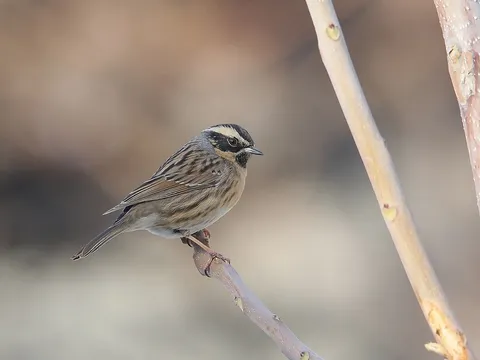
Long pale yellow eyebrow between a dark crown and a stripe through the eye
-
Rusty-brown streaks on the back
-
Three-syllable call, "ti-ti-ti"
About the species
Brown above and ochre-yellow below, the Siberian accentor has a dark brown cap set off by a long, pale yellow eyebrow. Chestnut streaks run down its back and across the sides of its breast, while a dark patch behind the eye and grey sides to the neck give the head a strong pattern. Two pale bars show on the folded wing.
It tends to stay low and slip into dense cover, picking insects from the ground or from leaves and twigs. A short "ti-ti-ti" call may reveal it; males sing a louder, high "chirichiriri" from the top of a bush or tree, especially early in the breeding season.
It breeds across northern Russia and Siberia in willow and birch woods or open coniferous forest, often near rivers or bogs. It migrates south for winter in Korea and eastern China, using shrubs and bushes, often beside streams; in winter it may also eat seeds and feed near people.
Where to find
-
In northern willow and birch woods beside rivers or bogs, listen early in the breeding season for a song from a bush or tree top.
-
In open coniferous woodland, look on the ground for a Siberian Accentor picking insects.
-
In winter, scan dense shrubs beside streams for feeding movements on the ground or among the branches.