Herons · Pelicans and herons
Squacco Heron
Link copied.
Ardeola ralloides
Link copied.
How to recognize it
-
Length 44–47 cm
-
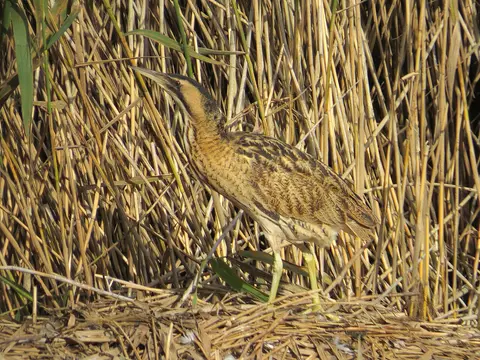
Stocky shape, short neck and thick short bill; buff-brown back
-
Yellow-buff plumage, white belly, tail and wings
-
Red legs; greenish-yellow bill with a black tip
About the species
The Squacco Heron has warm ochre-buff plumage, with a white belly and tail. In flight, its white wings make it look much paler. Red legs and a greenish-yellow bill tipped in black add contrast. During breeding, long white feathers edged in black extend from the back of its head.
It usually keeps to itself or gathers in small groups, defending a feeding patch from others of its kind. At nesting time, it joins small colonies, often alongside other wading species, and builds a platform of sticks in trees or shrubs.
It breeds around freshwater marshes and wet lowlands with reeds in the Mediterranean, the Middle East and parts of Asia. At dusk, it hunts among dense reeds or shrubs for aquatic insects, frogs and small fish. After breeding, it migrates south to sub-Saharan Africa, though some stay in the southern Mediterranean for winter.
Where to find
-
At dusk beside a freshwater marsh, look into dense reeds or shrubs for Squacco Herons hunting aquatic insects, frogs, and small fish.
-
From April to June, watch reed marshes from a distance for small nesting colonies, with nests built directly on reed stems.
-
In Central Europe through the end of summer, watch for a Squacco Heron taking off near wetlands — its wings look almost white in flight.