Swifts
Alpine Swift
Link copied.
Tachymarptis melba
Link copied.
Voice
Call
How to recognize it
-
Body length 20–23 cm
-
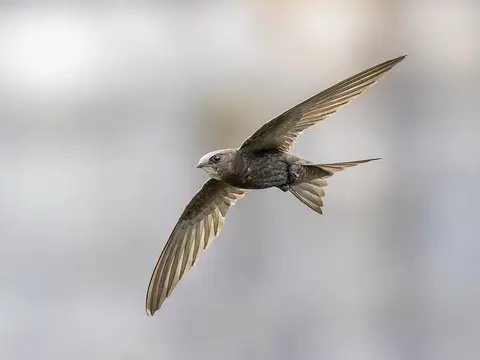
Long pointed wings, short forked tail
-
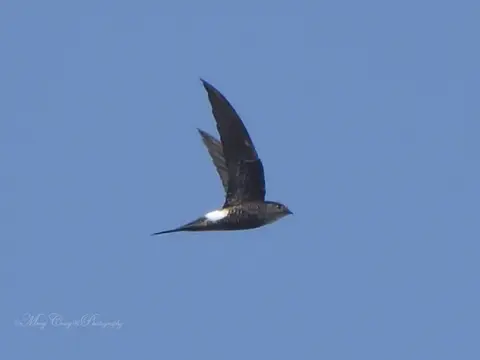
White throat and belly, separated by a dark breast band
-
Powerful flight with deep, slow wingbeats
About the species
Mostly dark brown above and along the sides, the Alpine Swift has a white throat and a large oval white patch on its belly. A dark chest band separates the pale areas, while its long, swept-back wings and shallowly forked tail show clearly in flight. The white underside distinguishes it from the Common Swift.
It spends nearly all its time in the air, drinking as it flies and even sleeping without landing. Its call is a drawn-out "twitter," and deep, slow wingbeats carry it over long distances. It has been recorded staying airborne for more than six months at a stretch.
It nests in cliff crevices and caves, as well as in old buildings in Mediterranean towns, usually in colonies. It breeds from southern Europe across Asia to the Himalayas; southern European populations migrate to southern Africa for winter. Most of its food is insects, though it also takes spiders.
Where to find
-
In summer, look up over old buildings in Mediterranean towns: large flocks sweep low over the rooftops.
-
During the breeding season, watch the nesting niches in mountain cliff crevices and caves — flying silhouettes disappear into them.
-
On a mountain walk at dawn or dusk, look up as flight activity increases and silhouettes gain height and make longer horizontal flights.