Pheasants and grouse · Gamebirds
Black Grouse
Link copied.
Lyrurus tetrix
Link copied.
How to recognize it
-
Male 49–58 cm, female 40–45 cm
-
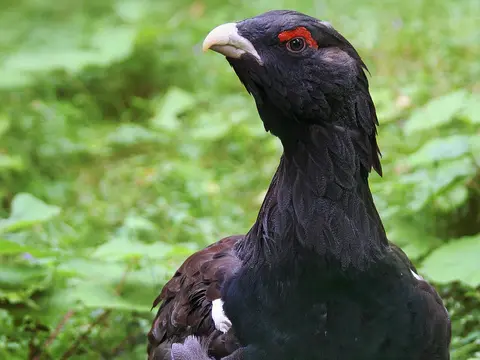
Male glossy black, with red eyebrows and a white undertail; female rusty brown and barred
-
Male’s outer tail feathers curl outward, giving the tail a lyre shape
-
In spring, displaying males give a long bubbling coo in open ground
About the species
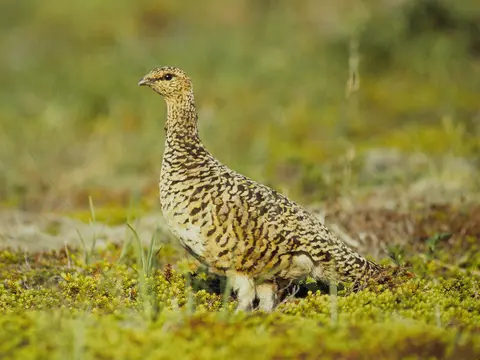
The male is glossy black, often with a blue-green sheen, while the female is rusty brown with fine dark and pale bars. A white patch flashes across the male’s wing, and his outer tail feathers curve outward into a lyre shape. The male’s bright red eyebrow adds a sharp contrast.
In spring, males gather on open ground, fan their tails, chase one another and bubble out a low, rolling coo; females answer with quick, cackling notes. Away from display grounds, they spend much of their time on the ground, but climb trees to feed in winter. In severe cold, they dive into snow and shelter in chambers beneath the surface, emerging to feed.
They live where woodland meets open heath, scrub, meadow or bog, rather than in unbroken forest. Their food is mostly plant matter: berries and shoots in warmer months, then buds and conifer needles in winter. They usually stay within the same region, though some move around when winter food is scarce.
Where to find
-
At spring dawn on open leks beside woodland or shrub cover, listen for bubbling calls and watch males fan their tails and chase one another.
-
In summer clearings among berry shrubs, look for feeding on berries, shoots, and stems.
-
In winter dense forests, scan the trees for flocks feeding on tree buds and conifer needles.