Pheasants and grouse · Gamebirds
Western Capercaillie
Link copied.
Tetrao urogallus
Link copied.
How to recognize it
-
Male 74–85 cm; female 54–64 cm
-
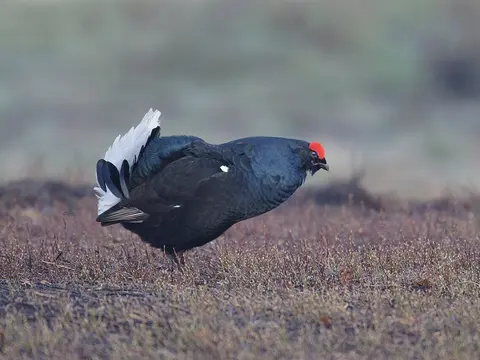
Male with a dark head, greenish-steel breast and white wing patch
-
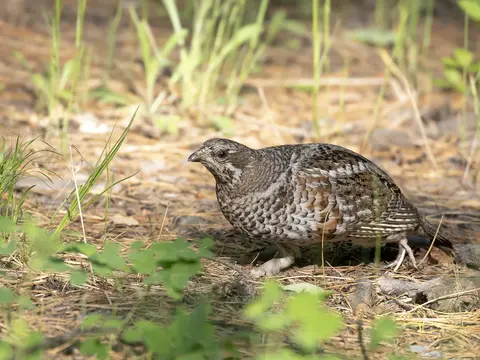
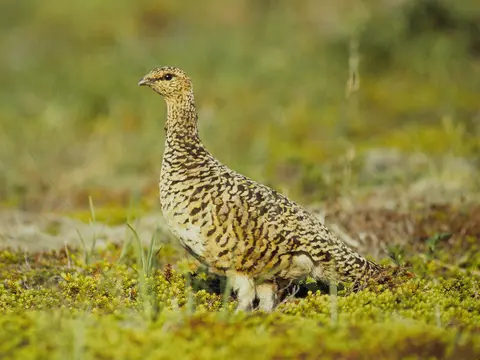
Brown upperparts with dark crossbars, paler underparts
-
Heavy, noisy takeoff with frequent wingbeats
About the species
The male is dark grey-brown, with a green sheen across his breast, a rounded black tail marked with white, and a bright red patch above each eye. The smaller female is mottled rusty brown, black and buff, with dark bars that help her blend into ground cover. Her muted colors contrast with his dark plumage and glossy breast.
At spring dawn, males court from a thick branch, fanning their tails and pointing their beaks skyward. The song begins with quick double clicks, speeds into a popping rattle, then ends in scraping notes; during that last part, a male may drop his usual caution. Takeoff is loud, and the feathers whistle as he flies.
The Western Capercaillie lives year-round in mature, open conifer and mixed forests with dense ground cover. It feeds on bilberry leaves and berries, shoots, buds and other plants; chicks also eat insects, while adults rely largely on pine, spruce and fir needles in winter. It is generally sedentary, though heavy snow can push individuals to lower elevations.
Where to find
-
In old, open coniferous or mixed forest with a rich berry ground layer, look low for a Western Capercaillie feeding on bilberry leaves and berries.
-
In winter, when deep snow covers the ground, look into pine and spruce crowns for needle-feeding, which can continue through much of the day and night.
-
In spring, at dawn in mature forest, listen for clicking from a thick branch, then watch a nearby open patch where males continue their display on the ground.