Pheasants and grouse · Gamebirds
Common Quail
Link copied.
Coturnix coturnix
Link copied.
Voice
Song
Call
Song
How to recognize it
-
Small, compact, clearly smaller than a pigeon
-
Ochre-brown coloring, dark and pale streaks on the back
-
Stays in grass; when flushed, flies low and soon disappears into cover
-
Male often repeats the three-part call, "wet-my-lips"
About the species
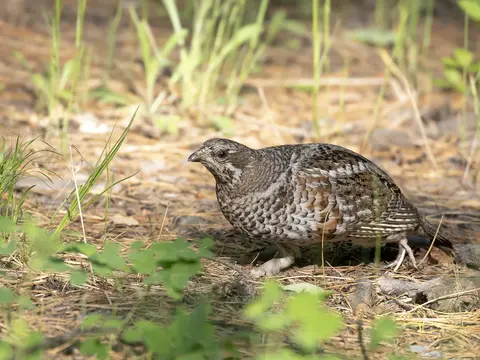
The Common Quail’s warm, ochre-brown plumage is broken by dark and pale bars and spots across the crown and back. A pale stripe above the eye and rusty coloring behind it mark the head, while its long wings are more noticeable in flight than when it slips through grass. Its mottled coloring helps it stay hard to pick out among crops.
The male repeats a “wet-my-lips” call in quick bursts, most often in the morning or evening and sometimes at night. The call is often the only clue that one is nearby. It creeps through cover rather than flying, and if flushed, keeps low before dropping back into the grass.
Fields and crops are its main habitat, where it searches the ground for food. It eats seeds and insects, including weed seeds and grain left after harvest. It breeds across Europe and western Asia, then migrates south to winter in Africa and southern India.
Did you know?
-
20 million quails a year, eaten
Until recently, Southern Europe and North Africa trapped and served over 20 million quails a year — and the population crashed under that pressure.
Link copied.
-
The only migrating gamebird
Among Russia's gallinaceous birds, the quail is the only true migrant: in autumn it heads for North Africa and Arabia while its relatives stay put.
Link copied.
-
Hunting bugs from day one
From day one the chicks catch insects and nibble shoots on their own, and by 19 days they are already flying.
Link copied.
Where to find
-
In fields outside town, as grass grows, listen in the morning or evening for the short, repeated call of a male common quail.
-
When cereal crops ripen, look for movement close to the ground in the crop as it feeds on seeds and insects while staying concealed.
-
If flushed from a field, watch for a low flight before it drops back into cover.