Hawks and eagles
Black Kite
Link copied.
Milvus migrans
Link copied.
Voice
Song
Call
Alarm
How to recognize it
-
44–66 cm long
-
In flight, long wings and a shallow fork in the tail
-
Adults: dark-brown body, sometimes a pale crown
-
Circles and soars for long periods on rising thermals
About the species
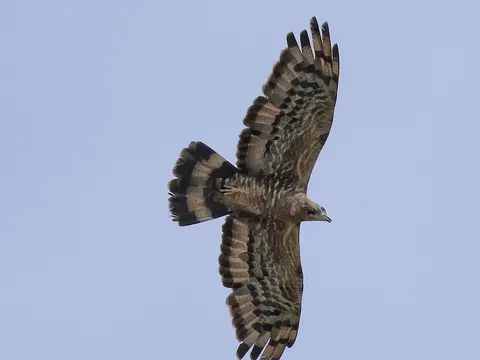
Against the sky, the Black Kite looks mostly dark brown, with a paler head and neck and a darker patch behind the eye. Its long wings angle slightly in flight, and its tail is forked, though less deeply than a Red Kite’s. The underside is lighter brown, with dark streaks running down the body.
It circles on rising warm air, then drops with its legs lowered to snatch food. A sharp whistle often runs into a quick, whinnying trill. It takes live prey but also scavenges, so its meals can vary with what is available.
It uses many kinds of woodland, usually near water, and in parts of India it also circles over crowded cities. Fish, insects, small animals, refuse, and carrion all feature in its diet. In temperate regions it migrates to warmer areas for winter, while tropical populations often stay year-round.
Where to find
-
In forest-steppe towns beside major rivers during the breeding season, look above the center for a Black Kite gliding on rising air currents as it searches for food.
-
In densely populated Indian cities, look up for long soaring on rising air currents and occasional dives at food held by people.
-
On migration routes by broad water barriers, look for large flocks gathering before crossing.
-
In woodland beside water during the breeding season, watch the trees for adults returning to feed chicks at their nests.