Sylviid warblers · Perching birds
Eurasian Blackcap
Link copied.
Sylvia atricapilla
Link copied.
Voice
Song
Song
Song
How to recognize it
-
Slightly smaller than a sparrow
-
Olive-grey above, paler grey below
-
Black cap in males; reddish-brown in females, juveniles similar to females
-
Male song: musical warble ending in a loud, high-pitched flourish
About the species
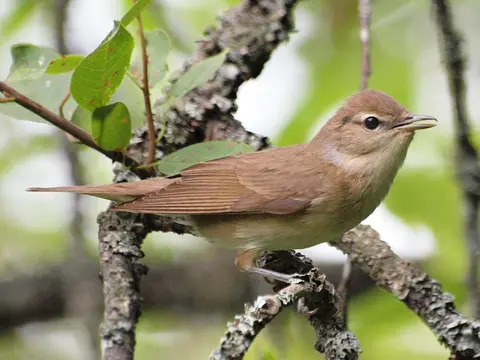
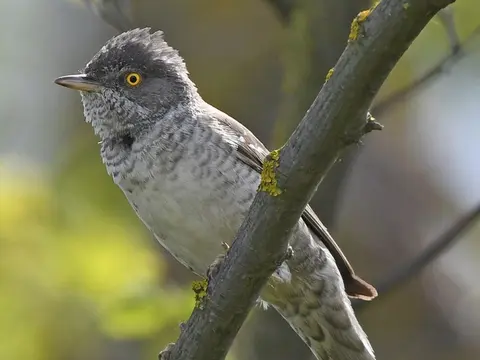
Among leaves, the Eurasian Blackcap can look mostly grey, with olive tones across its back and a paler underside. A small cap gives it away: black on the male, reddish brown on the female. Its pale chin and throat add a lighter touch against the muted plumage.
The male sings a rich, musical warble that builds to a high, ringing flourish. A harder "tac-tac" call cuts through it. In the breeding season, males sing to hold a territory, delivering the song in bursts that can last up to half a minute.
It uses mature leafy woods, but also parks, large gardens and overgrown hedges where trees rise above dense shrubs. It feeds mainly on insects in spring and summer, then shifts toward small fruits from late summer onward. Some populations stay near their breeding grounds, while others migrate; in Britain and Ireland, some continental blackcaps spend winter in town gardens.
Where to find
-
In city parks with tall trees and dense undergrowth during the breeding season, listen for the male's musical song from a tree.
-
In mature deciduous woodland in summer, watch for insects being picked from leaves and twigs.
-
In Mediterranean scrub in winter, watch for pulp being eaten from small fruits on a branch, with the seeds left behind.
-
In British and Irish towns in winter, watch garden feeders — Eurasian Blackcaps sometimes take peanuts there.