Sylviid warblers · Perching birds
Lesser Whitethroat
Link copied.
Sylvia curruca
Link copied.
Voice
Song
Call
Song
How to recognize it
-
Body length 11.5–13.5 cm
-
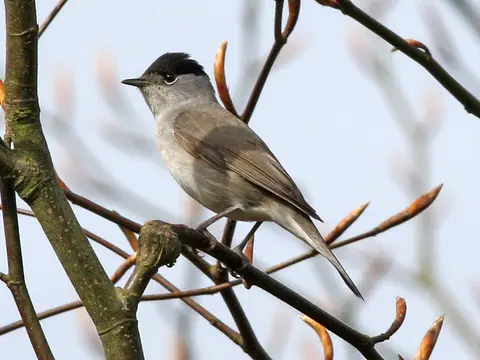
Grey head with a dark stripe through the eye, white throat
-
Bushes and hedges; often keeps out of sight in undergrowth
About the species
In a hedge or low tree, the Lesser Whitethroat shows a grey-brown back and pale underparts, with a grey head, a dark stripe through the eye and a white throat. Its wings are plain, unlike the Common Whitethroat’s chestnut wings, and the dark sides of its head contrast with the pale throat. Males and females look much alike.
It spends much of its time among shrubs and undergrowth, where it can stay out of sight. Its song is a quick, rattling run of "tet" or "che" notes. Males start singing within days of reaching their breeding grounds, though they may remain hidden among the foliage.
It uses hedges, gardens, open country and woodland edges, nesting low in thick bushes or brambles. Insects make up most of its food, with spiders and berries also on the menu. In Europe, it moves south for winter, reaching areas of Africa just below the Sahara.
Where to find
-
In Central Europe, from April to October, listen in garden hedges and plots for the Lesser Whitethroat's quick, rattling song — males begin singing in the first days after arriving.
-
At edges and clearings in sparse woodland, watch the undergrowth for movement — it spends most of its time there.
-
In steppe and forest-tundra country, check shrubs in river floodplains — nests are built low in the bushes.