Swallows · Perching birds
Eurasian Crag-Martin
Link copied.
Ptyonoprogne rupestris
Link copied.
Voice
Call
Song
How to recognize it
-
13–15 cm long
-
Ash-brown back, paler underside
-
Short, square tail with white patches near the tips of most feathers
-
Quick wingbeats alternate with glides on outstretched wings
About the species
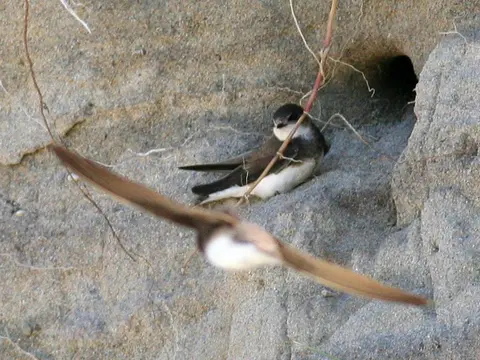
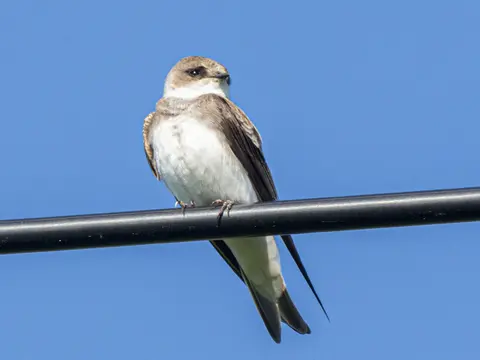
Against pale rock, its ash-brown back and wings contrast gently with a paler underside. The short, square tail has white patches near the tips of most feathers, visible when fanned in flight. Broad wings carry it through tight turns close to cliff faces.
Quick wingbeats alternate with glides as it hunts near the rock. Its short, high calls include "pli" and "tshir." It builds an open mud cup beneath a rock overhang, and increasingly uses bridges and other buildings as nest sites.
It breeds on dry, sheltered cliffs in mountain country, often near gorges. While hunting, it catches flying insects close to rock faces or over streams and alpine meadows. Many in Europe stay year-round or move to lower ground after breeding, while some northern populations and most Asian breeders migrate for winter.
Where to find
-
In dry, sheltered mountain gorges during the breeding season, watch the Eurasian Crag-Martin twist close to cliff faces as it catches insects.
-
At other times, scan above streams or alpine meadows for insect-hunting flights.
-
In Alpine settlements, check sheltered ledges beneath bridges for open mud nests and adults bringing food to chicks during the breeding season.