Finches · Perching birds
Eurasian Linnet
Link copied.
Linaria cannabina
Link copied.
Voice
Call
Song
Alarm
How to recognize it
-
Body length 13–16 cm
-
Slim silhouette and long tail
-
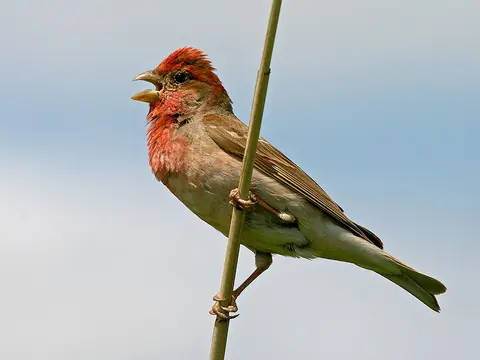
In spring, male with carmine forehead, crown and breast; female lacks red
-
Fast, tuneful song with rippling trills and twittering
About the species
In spring, the male has a red crown and breast that break up the warm brown of his back and wings. His long tail and grey bill add to the picture, while pale underparts show below. Females and juveniles lack the red, with brown upperparts and buff-streaked breasts.
Its song runs through quick trills and twitters, like a brief string of whistles. The male often sings from a bush top, tree, wire or fence, sometimes rising in song, circling a few times and gliding back to perch. Nearby males may sing at the same time, each within a short distance of the others.
It uses open country with thick bushes, including gardens, hedges and heathland. Most of its food is small seeds, gathered from the ground or low in bushes, with insects making up a smaller share. Many northern and eastern populations move south or toward the coast outside the breeding season; farther south, they may stay year-round or wander locally.
Did you know?
-
Twice an hour
In Denmark, male linnets stay within ten metres of their females before egg-laying and mate with them about twice an hour; genetics shows only around 4% of chicks come from another father.
Link copied.
-
Sixty seed species on the menu
The linnet feeds on the seeds of more than sixty plant species — out of seventy-two food items it takes overall — mostly from the daisy and cabbage families.
Link copied.
-
Returns to the same patch yearly
Adult linnets come back year after year to the very same breeding patch they used the season before — ringing recoveries confirm a strong site fidelity.
Link copied.
Where to find
-
In gardens and along hedgerows before nesting and during the nesting season, listen for the male's bubbling song from bush tops.
-
At shrub-lined meadow edges and forest margins, look for Eurasian Linnets feeding on seeds on the ground and low in bushes.
-
Outside the breeding season, watch for large flocks on coasts and salt marshes, sometimes mixed with twites.