Flycatchers and chats · Perching birds
European Pied Flycatcher
Link copied.
Ficedula hypoleuca
Link copied.
Voice
Song
Song
Call
How to recognize it
-
Slightly smaller than a sparrow
-
In spring, adult male with black upperparts, white underparts, a large white wing patch and a white forehead patch
-
In females, juveniles and males outside the breeding season, black is replaced by pale brown and white by off-white
-
Short, clear whistle: "whit, whit, whit"
About the species
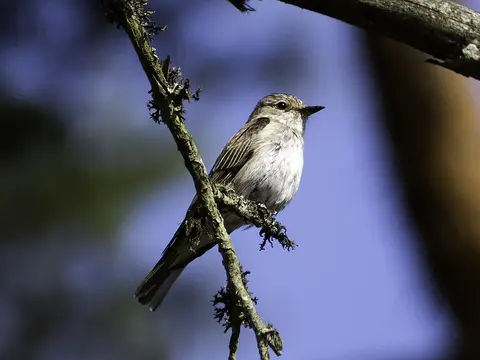
In spring, the breeding male is sharply black and white, with a dark back and crown above a white belly. A small white forehead mark and broad white patch on each wing break up the dark upperparts, while white edges show at the sides of his dark tail. Females and young males are browner and greyer, with muted pale underparts.
His song is loud and rhythmic, and a short "whit, whit, whit" serves as a contact or alarm call. During these calls, he may flick his wings and slowly tip his tail up and down; he also takes insects from leaves and branches, as well as catching them in the air.
It breeds in open deciduous woods, parks and gardens, with a preference for oaks; tree holes and nest boxes provide nest sites. Its food is mainly insects and other small arthropods, including caterpillars, flies and spiders, with berries also taken. After breeding in Europe, it migrates to tropical Africa for winter.
Where to find
-
In spring, listen in a light city park with oaks for the rhythmic song of the European Pied Flycatcher — it is characteristic of oak woods.
-
At a woodland edge, watch for insects caught in flight and foraging among grass, leaves, and branches.
-
During the breeding season, watch old tree holes and gaps under the roofs of wooden buildings for adults arriving with food for nestlings.