Hawks and eagles
Golden Eagle
Link copied.
Aquila chrysaetos
Link copied.
How to recognize it
-
Body length 76–93 cm
-
Adults: dark-brown plumage, golden feathers on the nape and neck
-
Soaring with long, broad wings slightly raised in a V-shaped silhouette
-
Juveniles: pale tail with a broad dark terminal band, often white patches on the wings
About the species
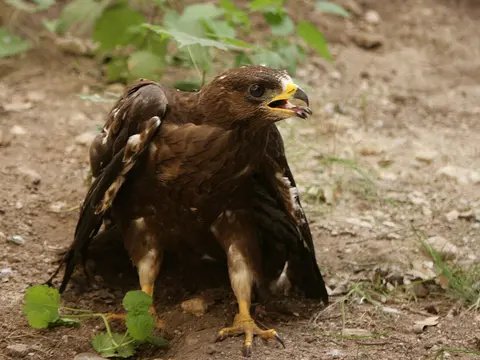
Dark brown across the body and wings, the Golden Eagle has a warm golden wash on its crown and nape, with a little grey in the inner wing and tail. Its broad wings are often held in a shallow V as it soars, and yellow feet show below. Juveniles are darker still, with white in the tail and sometimes white patches on the wings.
It spends long stretches soaring with little wing movement, then folds into a fast dive when prey comes into view. Usually quiet, it gives thin, high calls around the nest or to keep in contact; pairs may wheel and dive together during courtship.
Look for it over open hills, mountain slopes, tundra edges and other broad, lightly wooded country; it nests on cliffs or in large trees. Hares, rabbits, marmots and ground squirrels are regular prey, along with other small mammals and occasional other prey. Many stay near their territory year-round, while populations at the northern edge move south for winter.
Where to find
-
In open mountain valleys away from built-up areas, look for a golden eagle soaring high with its wings held in a shallow V, barely flapping.
-
In poor weather on open slopes, scan large boulders and dead trees: from these perches it patiently surveys the surroundings for prey.
-
In summer, watch at water sources as it drinks, bathes, or preens.