Tits · Perching birds
Gray-headed Chickadee
Link copied.
Poecile cinctus
Link copied.
How to recognize it
-
Body length 12.5–14 cm
-
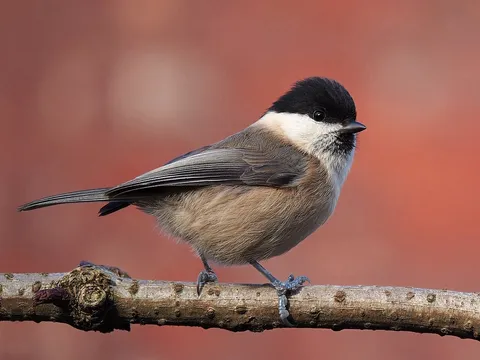
Gray-brown head, white cheeks
-
Black throat, white breast
-
Dark wings with pale feather edges
About the species
The head is gray-brown, with white cheeks, a dark throat and a darker stripe through the eye. Brown upperparts meet a whitish underside, with rusty tones along the flanks. Pale edges pick out the dark wing feathers. The crown is slightly paler than the throat and eye stripe.
Its call is similar to a Willow Tit's. It nests in tree cavities, often low down, and may clear pieces of rotten wood from the hollow. Some nest holes were first made by other tits or woodpeckers.
It lives in northern conifer woods, including birch-rich and mixed forests, from Scandinavia across northern Eurasia to Alaska and northwestern Canada. In summer, it eats mainly insects and spiders; in autumn and winter, oily seeds, especially from conifers, become more important. Most stay in the same region year-round rather than migrating.
Where to find
-
In summer, look for the Gray-headed Chickadee foraging for insects and spiders in conifer forest.
-
In autumn and winter, look for it gathering oily seeds among conifers.
-
At low cavities in conifers, watch for bits of rotten wood being carried out as the nest hollow is cleared.