Skuas · Shorebirds
Great Skua
Link copied.
Stercorarius skua
Link copied.
How to recognize it
-
Length 50–58 cm
-
Adults streaked greyish-brown, with a black cap
-
Massive chest, short blunt tail
-
White wing flashes in powerful flight
About the species
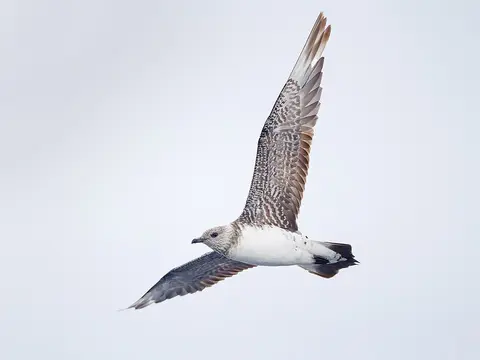
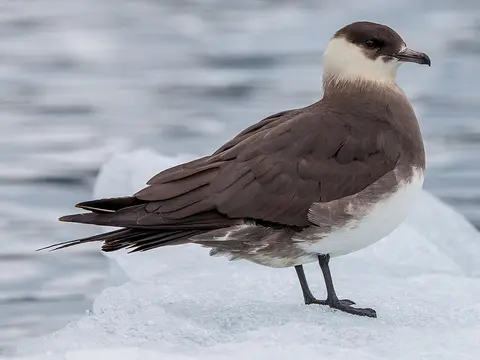
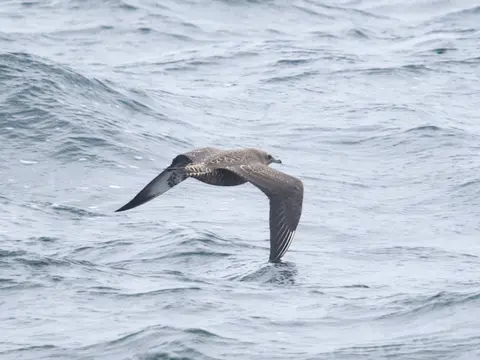
The Great Skua has streaked grey-brown plumage, a black cap and bold white flashes across the wings. Its short, blunt tail and deep chest show clearly as it banks over the sea, while young ones are warmer brown and unstreaked underneath.
Its call is a harsh "hah-hah-hah-hah." At sea, it chases gulls, terns and even gannets to steal fish, sometimes making a gannet drop its catch. Less agile than smaller skuas, it relies more on strength when harassing them, and also hunts smaller seabirds.
It nests on coastal moorland and rocky islands in Iceland, Norway, the Faroe Islands and Scotland. Fish makes up most of its food, but it also takes seabirds and their eggs, carrion and scraps discarded by fishing boats. After breeding, it spends winter at sea in the Atlantic, regularly reaching North American waters.
Where to find
-
During the breeding season on coastal moorland and rocky islands in Iceland, Norway, the Faroe Islands, and Scotland, watch from a distance as adult Great Skuas dive at anyone approaching their nests.
-
Over the sea, watch for gulls and terns being chased into dropping their catch, which is then stolen.
-
In winter on the Atlantic, around fishing vessels, look for discarded bycatch being picked up from the water.