Skuas · Shorebirds
Parasitic Jaeger
Link copied.
Stercorarius parasiticus
Link copied.
Voice
Alarm
How to recognize it
-
Body length 41–48 cm
-
Adults of the light morph: yellowish-white head and neck, black cap
-
White wing flash in all morphs; breeding adults have a pointed central tail projection
-
Sharp nasal cry, "kaow"
About the species
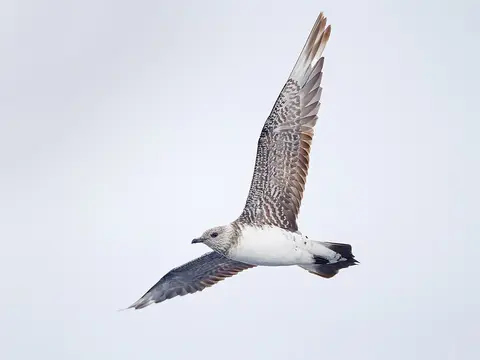
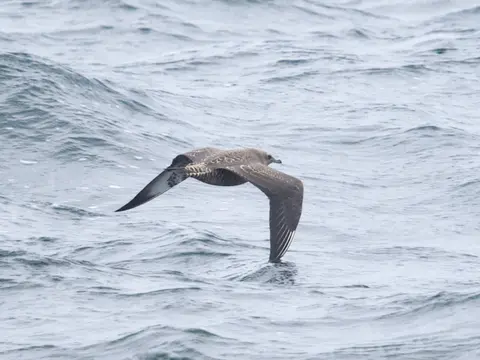
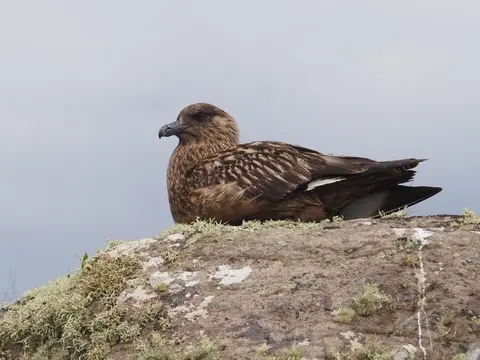
Plumage ranges from all-over dark brown to a pale form with a brown back and mostly white underparts. On pale adults, a black cap tops a yellowish-white head and neck, and a white flash crosses the dark wings. Breeding adults have a pointed central tail feather that projects beyond the rest.
Its usual call is a nasal mew, repeated during display, while the alarm note is shorter. Near a nest, it may fly at the head of an approaching person or fox.
It nests on dry tundra, upland slopes and islands across northern Eurasia and North America. During breeding it takes rodents, insects, eggs and chicks; on migration and in winter, it often chases gulls and terns until they drop a catch, then swoops in to take it. It winters at sea in tropical and southern oceans.
Where to find
-
On dry tundra during the breeding season, listen for nasal mewing and wailing calls.
-
At sea during migration and winter, look for chases after gulls and terns to steal their catch.
-
In autumn in northern Russia, look overhead: the Parasitic Jaeger migrates overland toward the Persian Gulf.