Finches · Perching birds
Long-tailed Rosefinch
Link copied.
Carpodacus sibiricus
Link copied.
How to recognize it
-
Body length 16–19 cm
-
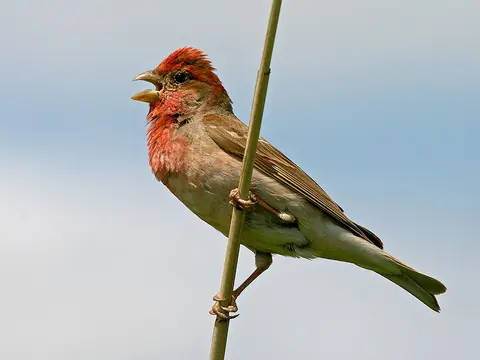
Adult males with pink head, rump and belly; females and young males gray, with sparse black streaks
-
While roaming, in small flocks of 5–10 among low shrubs
About the species
On a male Long-tailed Rosefinch, rose-pink spreads across the head, rump, and belly, set off by dark wings marked with white and a long black-and-white tail. White flecks break up the pink on its throat and upper breast. Females and young males are mostly gray, with fine dark marks and a rump washed buff or pink.
It forages in small groups of five to ten, sometimes alongside redpolls and sparrows. During the breeding season it stays in one area; at other times it wanders through low shrubs along rivers, roads, and railway lines.
It breeds in shrub thickets beside rivers and marshes, and also lives in temperate forests, grasslands, and moist scrub across Asia. Most of its food is small seeds, including flax, hemp, mugwort, and nettle, gathered from plants or the ground; it also eats some insects.
Where to find
-
During nomadic movements, look along railway lines and major roads for small flocks of Long-tailed Rosefinches in low shrubs, gathering seeds from plants and the ground.
-
In the breeding season, scan shrub thickets on riverbanks and in marshes for cup nests, usually 0.5–3 m above ground.
-
On open grassland beyond the city, watch for seed-picking among the grasses and on the ground.