Falcons
Merlin
Link copied.
Falco columbarius
Link copied.
Voice
Call
Call
How to recognize it
-
24–32 cm long; stocky build
-
Short, pointed wings and a long tail
-
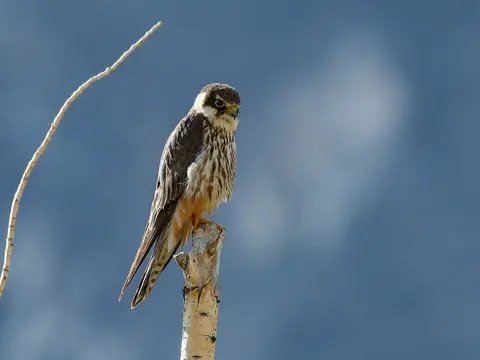
Adult male with a blue-gray back; female and young brown above, with pale, dark-spotted underparts
-
Fast, low flight: frequent shallow wingbeats alternating with glides
About the species
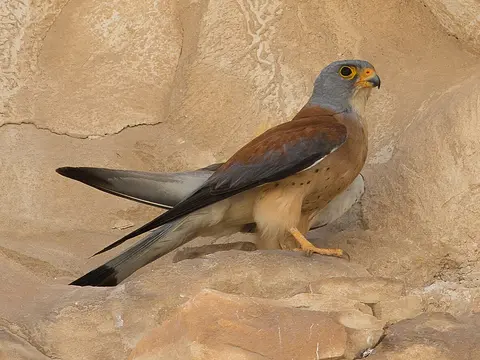
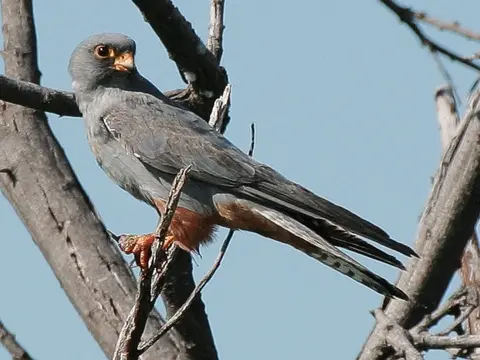
A male Merlin has a blue-gray back and buff-to-rust underparts streaked with dark brown. Broad dark bands cross his long tail, which ends in a black tip edged with white. Females and young are browner above and pale buff below, with brown spots instead of the male’s streaks.
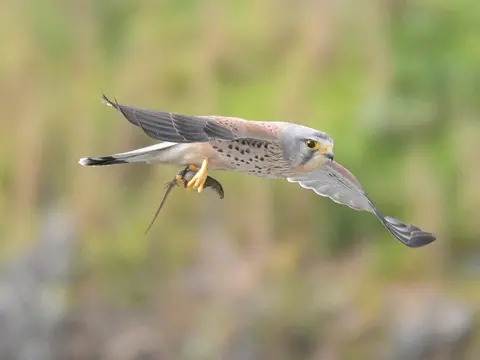
In flight, it skims low over the ground with quick wingbeats, then catches sparrows and other small prey in the air. Usually quiet away from its nest, it gives a sharp, quickening “kyak-kyak-kyak” when alarmed; females have a higher, faster call.
Look for it over open ground with shrubs or scattered trees, including grassland, moorland and parks; it avoids dense forest. It hunts mostly sparrows, larks, swallows and other small prey, and also takes rodents and insects. Many populations migrate south for winter, while some in milder parts of the range stay or move only short distances.
Where to find
-
In a city park with shrubs and scattered trees, watch for a swift, low pass between them as the merlin surprises prey.
-
At an open riverbank or bog edge, look for a hunting flight just above the ground, scanning for prey on the ground or in low vegetation.
-
Outside the breeding season on open steppe, watch for paired hunting: one flies low while the other stays 10–20 m higher.