Finches · Perching birds
Redpoll
Link copied.
Acanthis flammea
Link copied.
Voice
Call
Song
Call
How to recognize it
-
Slightly smaller than a sparrow
-
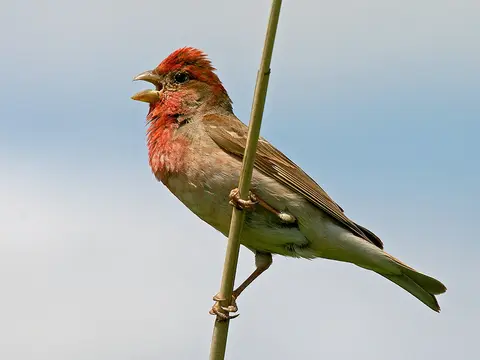
Red cap on brownish-gray, dark-streaked plumage
-
Dark throat patch and two pale wing bars
-
Flies in tight flocks, with continuous "che-che" chatter
About the species
Brownish gray with dark streaks, the Redpoll has a red cap that stands out against its pale head. A black patch marks the throat, and two pale bars cross each dark wing; the rump can show a pinkish wash. Males often have pink-red on the breast, while females and young are mostly pale below.
In flight, redpolls keep close together, chattering almost without pause: "che-che" and "che-che-che." They sing little except in spring, when calls can run into a dry trill. At winter feeders, a flock may work together to push larger visitors aside.
They breed across northern tundra and taiga, among birch and willow scrub and in conifer woods, then move south in winter, sometimes far beyond their breeding range. Seeds make up most of the diet, especially birch and alder seeds in winter; they also take insects and may visit feeders.
Did you know?
-
Never the same wintering ground twice
Redpolls very rarely return to their previous wintering sites — there are almost no recaptures of banded birds at the same location.
Link copied.
Where to find
-
In winter, a whole flock may crowd a feeder and drive larger visitors away.
-
In winter birch or alder woods, look among the branches for seed-feeding.
-
During the breeding season, look to treetops and bushes in the forest: pairs and small flocks land there and call.