Longspurs · Perching birds
Snow Bunting
Link copied.
Plectrophenax nivalis
Link copied.
Voice
Call
Call
How to recognize it
-
Body length 15–16.5 cm
-
Breeding male: white body, black back and wingtips, broad white wing stripe
-
In winter, broad orangey-brown feather edges on the back, orange-yellow bill
-
Small flocks fly in an undulating pattern; clear descending, rippling whistle
About the species
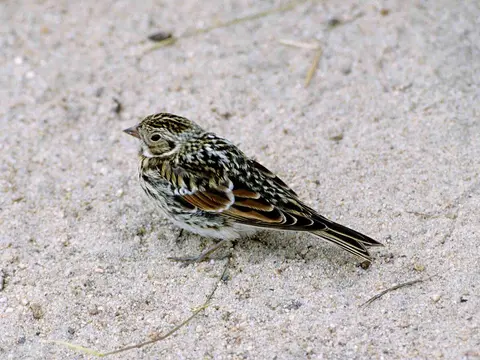
In breeding plumage, the male is mostly white, with black across his back and at the wing tips; the female has brown-edged dark feathers on her back. In winter, rusty-brown edges soften the contrast on both, and the bill is yellow with a dark tip. White patches across the wings flash as it takes flight.
On the ground it walks or runs, adding a hop when needed, then flies in small flocks along a rising-and-falling path. Its call is a rippling whistle, “per-r-r-rit.” Males also give a short, loud warbling song from a perch or in flight.
It breeds in rocky Arctic tundra, placing its nest in a crack or cavity, then heads south for winter to open fields, farms, and lake shores. In cold months it picks seeds from low stems above the snow, and adds insects and spiders to its diet in summer; its young are fed invertebrates.
Where to find
-
At wintering grounds in open fields and on farms, look for flocks of snow buntings walking over the ground and gathering seeds.
-
During the breeding season, watch rocky crevices in the Arctic tundra for a male bringing food to a female in the nest.
-
In Greenland during courtship, listen for a male's loud song during a display flight and then from a perch.