Sparrows · Perching birds
Spanish Sparrow
Link copied.
Passer hispaniolensis
Link copied.
How to recognize it
-
15–16 cm long
-
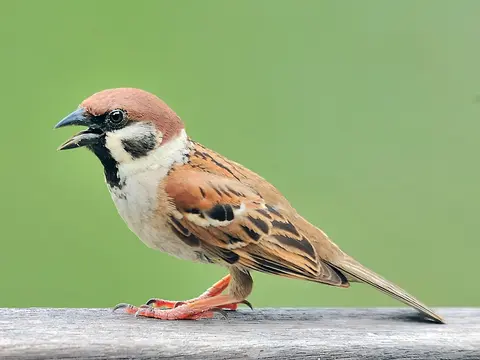
Breeding male: chestnut head, white cheeks, black throat and upper breast
-
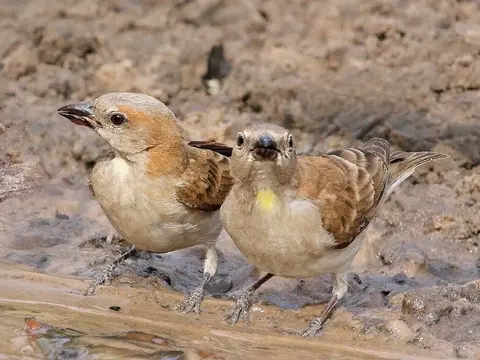
After autumn moult, male’s black breast patch breaks into separate speckles; females and young, brown-buff with a broad pale eyebrow
-
Often gathers in large flocks
About the species
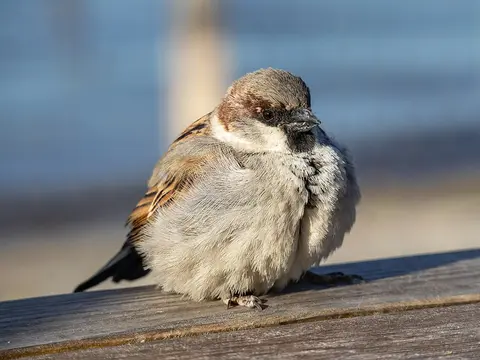
In breeding plumage, the male has a chestnut head, white cheeks and a black, heavily streaked chest. His russet-brown back is marked with dark stripes above pale underparts. Females are more subdued, with brown-and-cream plumage, a pale eyebrow and fine dark streaks along the sides.
They gather in noisy flocks and nest in colonies, sometimes placing nests close together or sharing them. Their chatter resembles a House Sparrow’s, but males give a louder, higher pair of chirps at the nest: "chweeng-chweeng."
They use farmland and open woodland, and in some parts of their range also live in parks and settlements. Where they share habitat with House Sparrows, they tend toward moister places. Adults eat grains and grass seeds, adding insects especially around breeding time; chicks are fed mostly on insects. In winter, they wander or make regular migrations.
Where to find
-
On the Canary Islands, Madeira and some Mediterranean islands where house sparrows are absent, Spanish sparrows may use urban areas — look for flocks.
-
During spring passage through Central Asia, watch for flocks feeding among crops.
-
In moister farmland and open woodland during the breeding season, look for closely spaced colony nests in trees and bushes — listen for the male's loud, high-pitched, two-syllable call at the nest.