Pigeons and doves
Stock Dove
Link copied.
Columba oenas
Link copied.
Voice
Song
How to recognize it
-
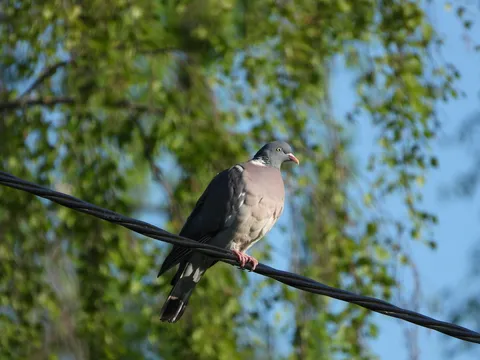
Smaller than a crow; blue-grey overall
-
Grey rump without a white patch; faint, incomplete wing bars
-
Pinkish-wine breast, green-purple sheen on sides of neck
-
Low, monotonous two-syllable coo, "Ooo-uu-ooh"
About the species
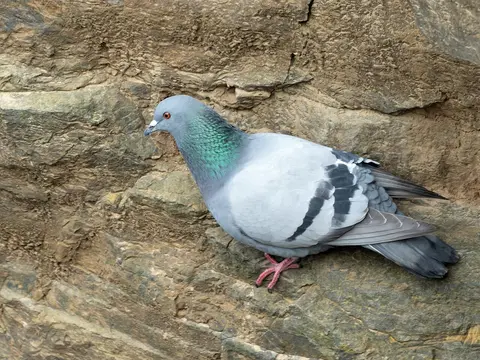
Blue-grey across the back and wings, the Stock Dove has a soft pink wash on its chest and a green-purple sheen on the sides of its neck. A dark band marks the tail tip, and the wing bars are faint and incomplete. Unlike a wild Rock Dove, it has a grey rump rather than a white one, and its wing bars are not two full dark bars.
Its low, repeated coo sounds like "Ooo-uu-ooh," with the first note carrying more weight. It flies quickly, sometimes snapping its wings sharply, and usually gathers in small groups rather than huge flocks. While nesting, it stays under leafy cover and goes quiet when approached.
Look for it in open woodland, old parks with hollow trees, or along coasts where cliffs offer nesting holes. It feeds mostly on the ground, picking up seeds, shoots, grain and, in some places, acorns; insects and snails are occasional food. In western and southern Europe it stays year-round, while farther northeast it moves south to avoid winter cold.
Where to find
-
In old city parks with trees containing large cavities, in spring listen for a male's low, repeated coo from a shaded branch near its nest.
-
At the edges of light deciduous and mixed woods, beside meadows and clearings, look for stock doves feeding on seeds on the ground in spring and summer.
-
On farmland during migration and in winter, watch small groups picking food from the ground.