Woodpeckers
Syrian Woodpecker
Link copied.
Dendrocopos syriacus
Link copied.
How to recognize it
-
About 23 cm long
-
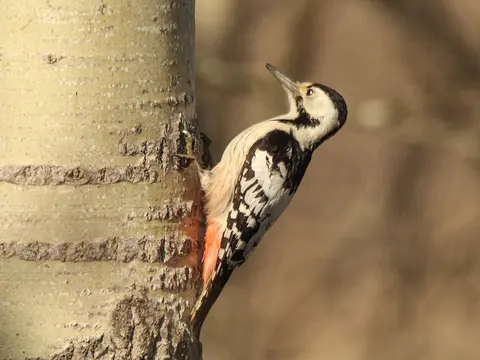
White shoulder patch; white cheek and neck patches merge, black stripe interrupted
-
Red nape patch in males; absent in females
-
Call a sharp "quit", higher and softer than the Great Spotted Woodpecker
About the species
Black and white across the back and head, the Syrian Woodpecker has warm buff-white underparts, with a reddish patch beneath the tail. A large white shoulder patch and white spots across the wings show as it moves between trees. Males have a crimson mark on the back of the head; females lack it. Compared with the Great Spotted Woodpecker, it has more white on the head and no white barring on the tail.
Look for it working up a trunk in quick hops, tapping the bark and sometimes turning upside down to probe a crevice. Its sharp "quit" call may give it away before it appears, while a rolling drumbeat on a branch can carry a long way; both sexes drum, not only during courtship.
Open woodland, tree-lined farmland and parks suit it, especially where old trees offer feeding and nesting sites. It searches bark and crevices for insects and grubs, then turns to seeds, nuts and berries when insects are scarce; it stays year-round from southeastern Europe east to Iran and has been spreading northwest.
Where to find
-
In city parks within the Syrian Woodpecker's range, listen for a long rolling drum on an old tree trunk or branch.
-
In gardens and fruit orchards, watch for short hops along trunks and branches as insects are sought in bark crevices.
-
On lawns beside homes, especially under fruit trees, watch for hops across the ground in search of fallen fruit.