Gulls and terns · Shorebirds
Black-headed Gull
Link copied.
Chroicocephalus ridibundus
Link copied.
Voice
Call
Call
Call
How to recognize it
-
Body length 35–39 cm
-
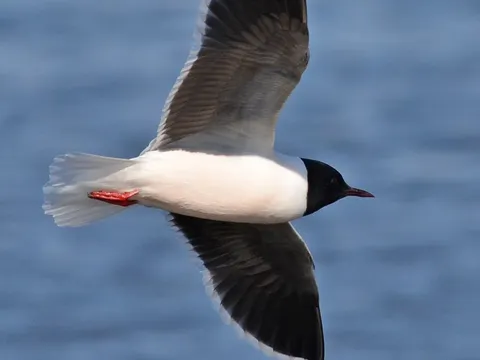
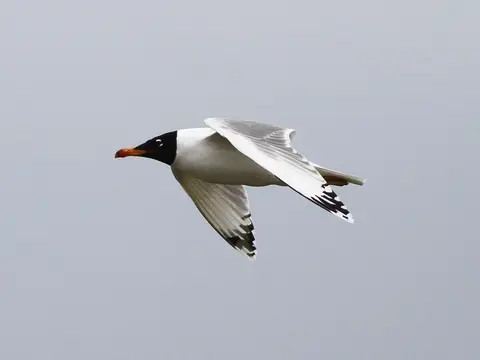
In summer, adults have a dark brown head and white neck
-
In winter, adults have a white head with dark spots by the ears and in front of the eyes
-
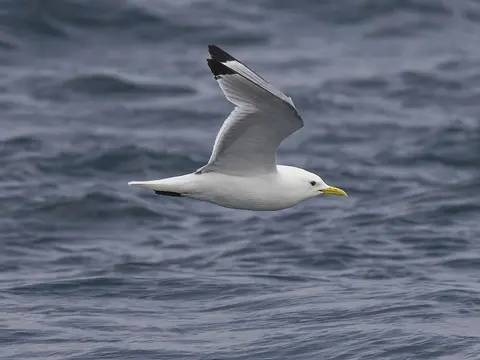
In flight, a broad white stripe along the front edge of the wing and a black rear edge
About the species
In summer, a dark chocolate-brown hood meets a white neck and body; the head is brown rather than truly black. Pale grey wings have black tips and a white edge along the front, while the bill and legs are red. By winter, the hood disappears, leaving a mostly white head with dark spots near the eyes.
The call is a sharp "kree-ar", and a busy colony can keep up a steady racket. It feeds on whatever is available, picking food from water, ground or air; after chicks hatch, adults carry empty eggshells away from the nest.
Look for it around lakes, river edges, marshes and city ponds; it also nests in reed beds and on small islands, sometimes in colonies of thousands. Insects, worms and other invertebrates make up much of its food, but it also takes fish and scraps, including in towns. Most populations move south or west for winter, while many stay where winters are mild in northwestern Europe.
Did you know?
-
The gull with two faces
Black-headed gulls grow their black mask only in the breeding season to frighten neighbouring gulls and space out territories, then turn away to show white when courting a mate so the same face that protects eggs doesn't drive their partner off.
Link copied.
-
Summer on land, winter fishing
Black-headed gulls switch diets with the seasons: in summer they live on land eating insects and grubs that can't flee, and only return to fishing in winter when they shed the black hood.
Link copied.
-
Finnish chick, Texan winter
A black-headed gull ringed as a fledgling in Finland in June 1996 crossed the Atlantic and was identified by telescope in Fort Worth, Texas, in January 2000, returning to the same Texas wintering spot the next year.
Link copied.
Where to find
-
Near urban waste sites, look for Black-headed Gulls picking through food scraps.
-
In summer on Russian rivers and lakes, watch them circle passing boats in search of food.
-
During the breeding season at marshes and shallow lakes, listen for noisy colonies among reed beds or on small grassy islands.
-
Beyond the city, by ploughed fields, look for them feeding on invertebrates on the ground.