Gulls and terns · Shorebirds
Common Gull
Link copied.
Larus canus
Link copied.
Voice
Call
Song
Call
How to recognize it
-
Body length 40–46 cm
-
Adults in summer: white body, grey back and wings, black-and-white wingtips
-
In winter: grey streaks on the head; often a dark band near the bill tip
-
High-pitched, shrill, laughing cry
About the species
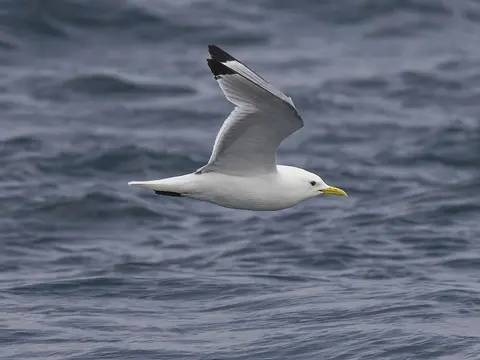
A grey back contrasts with white underparts, and black wingtips carry large white patches. The yellow-green bill is relatively fine, while the legs are yellow in breeding season and duller in winter. In cold months, grey-brown streaks spread over the rounded head and neck, and a dark band may show near the bill tip.
Over water, it glides on long wings and may hover briefly before plunging for prey. In shallows, it swims or walks while dipping its head to search. Its high, sharp call has a laughing quality, and calling becomes less frequent after the breeding season.
It nests by inland rivers, lakes and marshes, but also along coasts and, increasingly, around quarries, fish ponds and urban spaces. Fish are a main food, alongside shore invertebrates, insects, worms and food scraps. Most populations move south for winter and use coasts and large inland waters, while some in northwestern Europe stay year-round.
Did you know?
-
Ducks hire gull bodyguards
Tufted ducks deliberately nest inside or beside Common Gull colonies, exploiting the gulls' aggressive defence of their own nests as free protection against crows and magpies that otherwise destroy over half of all tufted clutches.
Link copied.
-
Moody colonists
Common Gulls are moody colonists that will suddenly forsake a long-occupied loch for no apparent reason and just as suddenly return, leaving traditional Highland breeding sites empty for a season.
Link copied.
-
Least common Common Gull
The Common Gull badly belies its name — in Britain it is the least common of all nesting gulls, almost never breeding south of the Scottish border despite a name suggesting ubiquity.
Link copied.
Where to find
-
During the breeding season, look on flat roofs of homes and industrial buildings for Common Gulls nesting and feeding their chicks.
-
Along shallow lake and river edges, watch for Common Gulls swimming and dipping their heads underwater as they search for food.
-
In winter, look for Common Gulls on coastal sandbanks and muddy shores, searching for shellfish and other small prey.
-
On meadows outside the city, watch for Common Gulls picking insects from plants and searching the ground for worms.