Gulls and terns · Shorebirds
Little Gull
Link copied.
Hydrocoloeus minutus
Link copied.
How to recognize it
-
Body length 24–28 cm
-
Light, fluttering, wavering flight
-
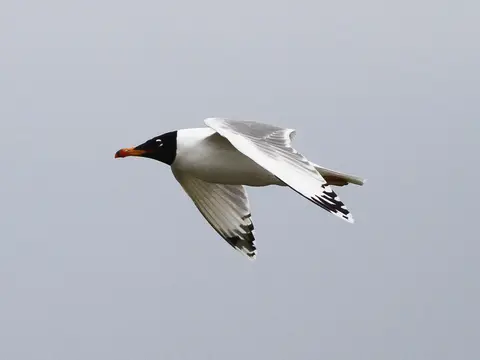
Adults in breeding plumage — entirely black head, short dark red bill
-
Adults from the second year — pale grey wings with a white trailing edge, nearly black underneath
About the species
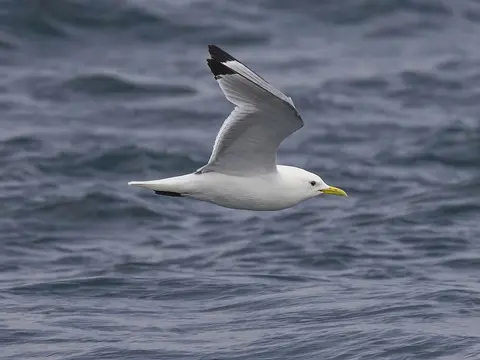
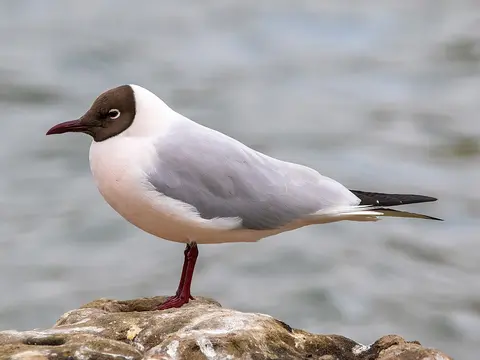
Against its white body, the back and wings are pale grey, with white tips tracing their rear edge in flight. In breeding plumage, adults have a solid black hood, a dark red bill and bright red legs, while the underside of the wing is much darker than the top. Unlike the Black-headed Gull, it has no white nape in this plumage. In winter, the head turns mostly white, with dark patches on the crown and behind the eye.
Its flight combines quick, fluttering wingbeats with glides, often on an uneven path just above the water. A repeated "kay, kay, kay" can rise into a quick "ke-kay" trill; while feeding, it snatches insects from the air or water’s surface and picks small crustaceans from the shallows.
It nests in shallow freshwater lakes, marshes and slow rivers, among dense waterside plants, often in small colonies with other gulls or terns. In the breeding season it takes insects and other small invertebrates; after migrating to the coast for winter, it feeds mainly on small fish and marine invertebrates.
Where to find
-
During the breeding season, at a shallow freshwater lake, watch for the Little Gull flying low over the water to catch insects on the wing.
-
In a marshy river floodplain or oxbow, look for a slow wade through the shallows while it picks up small crustaceans.
-
In winter, on a sandy or muddy sea shore — especially by a river mouth — watch for flocks feeding on small fish and marine invertebrates.