Gulls and terns · Shorebirds
Black-legged Kittiwake
Link copied.
Rissa tridactyla
Link copied.
Voice
Call
How to recognize it
-
Body length 37–41 cm
-
Adults: white head and underparts, light grey back, black wing tips without white spots
-
Black legs and yellow bill
-
Long call "kittee-wa-aaake"
About the species
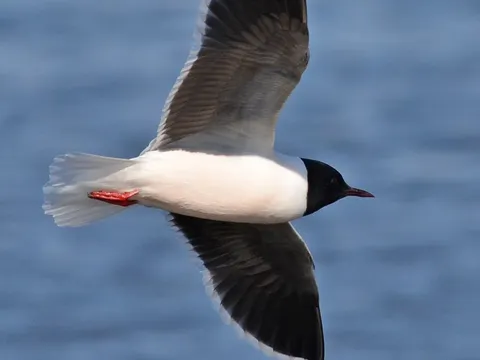
At a glance, the Black-legged Kittiwake is mostly white, with a pale grey back and wings that end in solid black tips. Its yellow bill and black legs add sharper color, while a dark patch behind the eye and a grey collar appear in winter. Juveniles have a bold black W across the wings and a dark band at the tail.
Around nesting cliffs, pairs call back and forth with a shrill, repeated "kit-ti-wake"; the whole colony can stay noisy through the day. Quick wingbeats carry them over the water, where they may hover briefly before dipping down for prey.
They spend most of the year offshore in northern Atlantic and Pacific waters, coming to steep sea cliffs to nest from May to September; a few colonies also use buildings near the coast. Fish make up most of their food, with small marine invertebrates also taken, and some populations move south for winter.
Did you know?
-
Older chick shoves sibling off the cliff
On the Pribilofs, the older kittiwake chick simply shoves its younger sibling off the cliff nest within a week of hatching — half to two-thirds of all second chicks die that way.
Link copied.
Where to find
-
Along the sea coast, watch groups over the water: the Black-legged Kittiwake hovers above the surface and dives for fish.
-
From May to September, listen for a noisy colony and look to narrow ledges on steep sea cliffs, where they nest.
-
In northern coastal cities with known urban colonies, look to building ledges and bridges during the breeding season: adults return to nests and call to one another.