Gulls and terns · Shorebirds
Mediterranean Gull
Link copied.
Ichthyaetus melanocephalus
Link copied.
Voice
Call
Song
Call
How to recognize it
-
Body length 39 cm
-
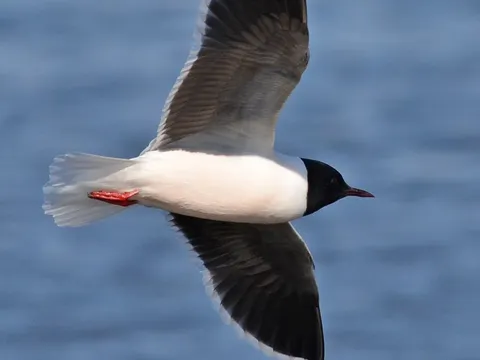
Breeding adult: black hood reaching the nape, white crescents around the eyes
-
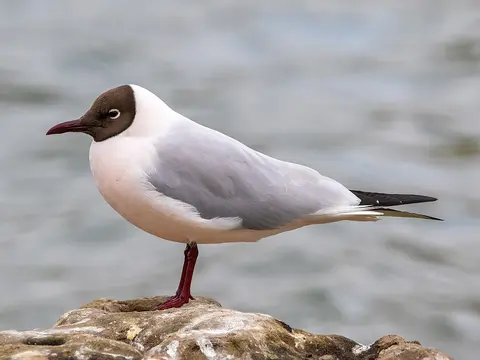
Nonbreeding adult: dusky mask through the eye
-
Pale grey wings, white primaries without black tips
About the species
In breeding plumage, a white body and very pale grey back and wings are topped by a black hood that reaches down the nape. White crescents frame each eye, and the dark red bill has a black band near its tip. Long, pointed wings extend beyond the fan-shaped tail. Outside the breeding season, the hood recedes to a dusky mask through the eye.
At nesting colonies, it gives a nasal "yeah" call and can be noisy. Its feeding is opportunistic, and in winter it joins groups at feeding spots before gathering at evening roosts.
It nests in reed beds and marshes, or on islands in lakes, sometimes sharing colonies with Black-headed Gulls where its own numbers are low. Along coasts, it feeds on fish, worms, insects, mollusks, and crustaceans, and also takes eggs and carrion. Many move to Mediterranean and Atlantic shores for winter, while some remain near their breeding areas.
Where to find
-
In a June observation in Vologda, groups of Mediterranean Gulls were seen on flat roofs among modern buildings — a local record, not a reason to expect them in every city.
-
On a sea beach, watch for feeding on fish, molluscs, crustaceans or insects.
-
During the breeding season, listen for nasal calls near colonies in large reed beds and marshes.
-
In winter on Mediterranean and Atlantic coasts, look for large groups feeding or gathering at evening roosts.