Sandpipers · Shorebirds
Black-tailed Godwit
Link copied.
Limosa limosa
Link copied.
Voice
Call
Alarm
Song
How to recognize it
-
Large, slim wader with long legs and a very long straight bill
-
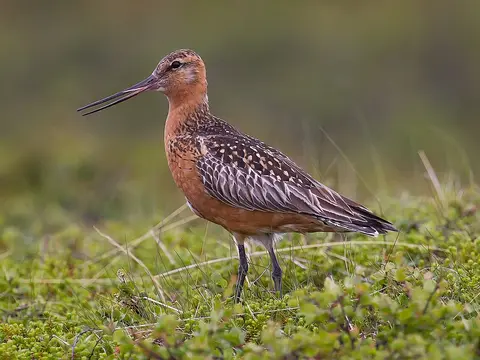
Breeding plumage: orange-rufous head, neck and breast; winter: plain grey-brown
-
In flight, bold white wingbar and white rump
-
Call: strident repeated ‘weeka weeka weeka’
About the species
The black-tailed godwit has a lean, long-legged look with a long bill and an elegant upright stance. In flight, the pale wing stripe and white rump are the easiest things to catch.
In the breeding season it gets noisy, with a harsh, nasal voice and showy display flights. On the ground it stays alert, and when disturbed it darts about, runs off, and takes to the air again.
It lives in wet meadows, bogs, lake edges, and other damp places with soft ground and tall grass. It feeds in shallow water and on land, taking aquatic invertebrates, and on migration and in winter it also eats berries, seeds, and rice; most populations move south for the cold season.
Where to find
-
Along muddy pond edges and canal banks — look for it wading in very shallow water, probing the soft bottom with its long bill.
-
At reed-fringed lake shores and wet meadows — easier to spot when a small group feeds together and gives a sharp nasal call.
-
On damp open lawns and flood-prone grassland outside the center — it feeds on the ground, making short deliberate steps through soft turf.
-
By puddled banks after rain — watch for the tall, long-legged wader standing half in water and sweeping the surface for prey.