Sandpipers · Shorebirds
Bar-tailed Godwit
Link copied.
Limosa lapponica
Link copied.
Voice
Call
Song
How to recognize it
-
Body length 37–41 cm
-
Long, slightly upturned bill, pink at the base and black at the tip
-
Breeding male rusty red, female duller; grey-brown outside the breeding season
-
Black-and-white bars across the tail
About the species
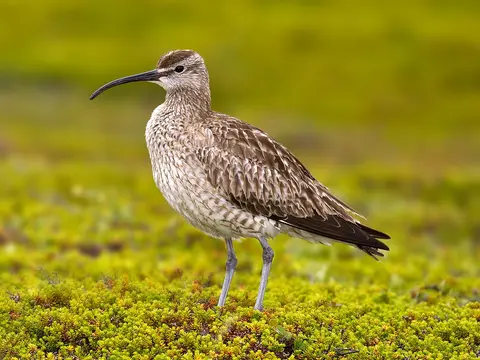
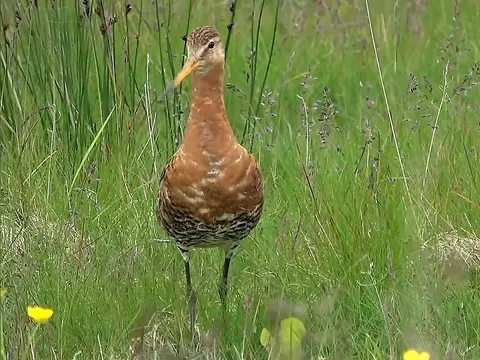
In breeding season, males turn brick red across the neck, breast and belly, while females are a duller chestnut. Outside this plumage, the upperparts are grey-brown and the underside pale. A long, slightly upturned bill has a pink base and dark tip; the tail is barred black and white. Blue-grey legs show as it walks across the shore.
On feeding grounds, it walks over the mud and probes with its bill, sometimes twisting it among matted vegetation. It searches by day and night, with activity shifting with the tide. In the breeding season, males make display flights, gliding in straight lines or circles while giving repeated calls.
It breeds in wet Arctic tundra and spends the non-breeding season on temperate and tropical coasts. On mudflats and estuaries, it feeds on bristle worms, small shellfish and crustaceans, probing into the mud or picking prey from the surface. Alaska-breeding godwits cross the Pacific nonstop to reach Australia and New Zealand.
Where to find
-
In winter, on muddy flats in European estuaries, watch for a bar-tailed godwit probing the mud for worms and shellfish at low tide.
-
In wet pastures, look for foraging among vegetation for invertebrates.
-
In Arctic tundra during the breeding season, look up for males making ceremonial flights — climbing, gliding and descending.