Thrushes · Perching birds
Black-throated Thrush
Link copied.
Turdus atrogularis
Link copied.
How to recognize it
-
Body length 24–27 cm
-
Male: black patch from chin to breast; female and immature: dark streaking
-
Rufous underwings visible in flight
About the species
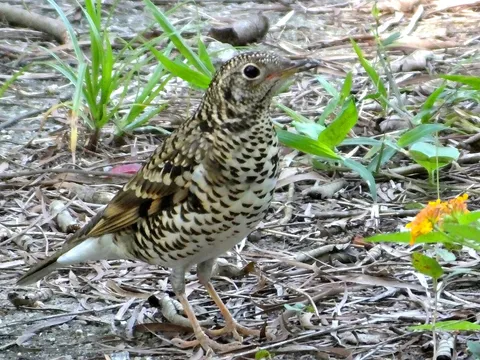
The male Black-throated Thrush has grey upperparts and whitish underparts, set off by a black patch that runs from the chin across the breast. Its tail is grey-black, and rusty orange shows beneath the wings when it flies. Females and young have dusky streaks across the throat and breast instead of a solid black bib.
It spends much of its time on the ground, then gathers into large flocks with other thrushes in winter. The male sings most actively at dawn, stringing together slow, varied whistles and a short, often scratchy trill. At night, it roosts in dense evergreen cover.
It breeds in coniferous and mixed forests, often in undergrowth near clearings, watercourses or swampy ground. Its food includes invertebrates, berries, cherries and seeds. It migrates from its Siberian breeding range to wintering areas from the Middle East across Central and southern Asia to Myanmar.
Where to find
-
Along forest clearings in Siberian or Ural coniferous and mixed taiga during the breeding season, look for a Black-throated Thrush searching the ground for invertebrates.
-
In damp coniferous or mixed woodland with undergrowth beside watercourses, listen at dawn during the breeding season for the male's unhurried, varied whistle-song.
-
In wintering areas, look for large flocks roosting in dense evergreen vegetation.