Thrushes · Perching birds
Mistle Thrush
Link copied.
Turdus viscivorus
Link copied.
Voice
Song
Call
Song
How to recognize it
-
About 27 cm long, stocky shape, long tail
-
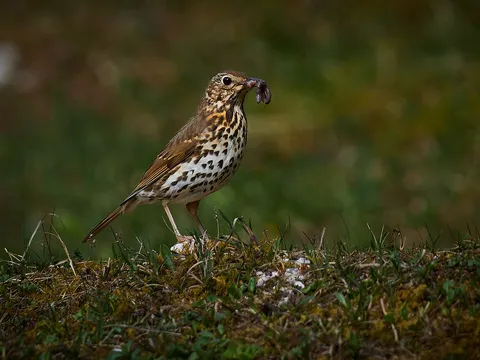
Grey-brown upperparts, pale underparts with round dark spots
-
White tips to outer tail feathers; undulating flight with short glides
-
Dry rattling call, "trrr"
About the species
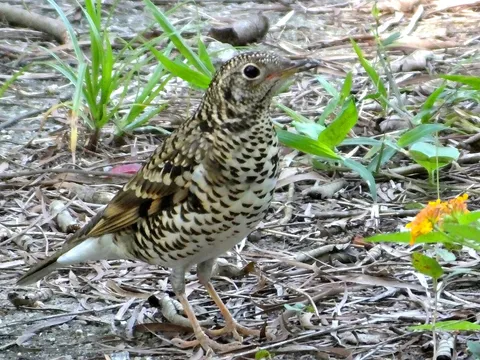
A pale grey-brown back contrasts with a grey-white throat and a yellow-buff breast that fades to an off-white belly. Round black spots cover the underside, packed more closely across the lower chest. White tips on the outer tail feathers show when it moves.
On the ground, it hops with its head held high, flicking its wings and tail when excited. Its loud, slow song carries in fluted whistles—"chewee-trewuu"—and it may sing even in wet or windy weather; an alarm brings a dry, rattling "krrrr." In winter, it may guard a mistletoe-laden tree or another fruit source, chasing away other fruit-eaters.
Look for it in parks, open woods, hedges and farmland, where it eats worms, insects, seeds and berries. Mistletoe berries are a favorite, along with holly, rowan and yew; seeds pass through its gut and may sprout on branches. Many stay year-round, while those from northern and eastern areas move south for winter.
Where to find
-
In city parks in Central Europe, listen for a loud song from a treetop — it is heard most often from November to early June.
-
In winter in city parks in Central Europe, watch near fruiting trees as the mistle thrush drives other thrushes away from the berries.
-
In open fields in winter or during migration, look for hops along the ground as it searches for earthworms.