Thrushes · Perching birds
Song Thrush
Link copied.
Turdus philomelos
Link copied.
Voice
Song
Song
Song
How to recognize it
-
Body length 21–23.5 cm
-
Brown back, pale chest and belly with crisp dark spots
-
Short runs and pauses on the ground while searching for worms and snails
-
Clear song with short trills; phrases usually repeated 2–4 times
About the species
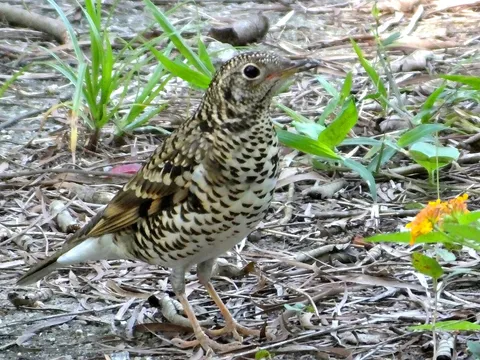
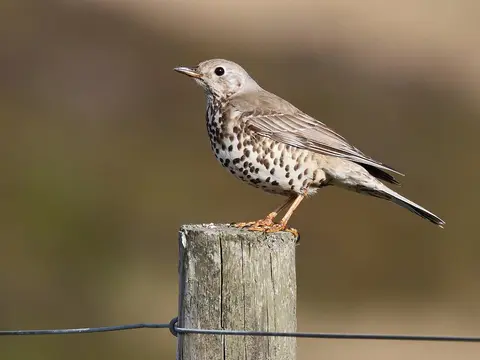
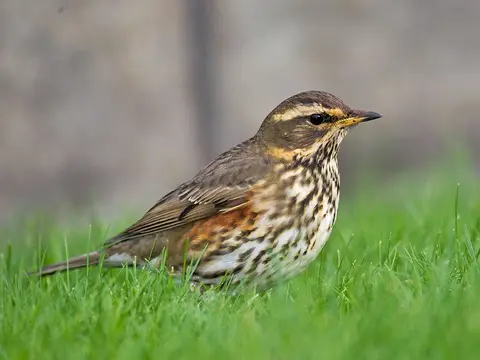
A Song Thrush has a warm brown back and a pale cream-to-buff chest and belly, marked with dark, rounded spots that thin out toward the throat. In flight, the underside of its wings flashes yellow, while its bill is yellowish and its legs pink. The sexes look much alike, so that spotted front is a useful clue in any season.
From a treetop or rooftop, the male strings together clear musical phrases, often repeating each one two to four times; between songs, a sharp "tsip" is a common call. On the ground it pauses between short runs to search leaf litter, and may crack a snail against a favorite stone before wiping it on the ground.
It breeds in woodland with dense undergrowth and nearby open ground, and also uses parks and gardens with trees and bushes. Earthworms and snails are regular fare, alongside insects, berries and other soft fruit; many northern and eastern populations move south for winter, while some western ones stay in place.
Did you know?
-
Wiping the snail clean
After pulling a snail from its cracked shell, the Song Thrush wipes the body along the ground — apparently scraping off shell fragments or stripping away the slime before swallowing.
Link copied.
-
Juveniles migrate, adults stay
Among British Song Thrushes, juvenile birds are far more committed to migration than adults: roughly 64% of young birds leave in autumn compared with only 48% of adults, the two age classes pursuing markedly different winter strategies.
Link copied.
Where to find
-
In western European city parks, especially those with spruces, listen for a male repeating clear musical phrases from the treetops.
-
In Russian forest parks and large parks linked to woodland, look near clearings for a run-and-stop search for food, followed by rummaging through leaf litter.
-
On city streets, you may occasionally see a Song Thrush smashing a snail shell against the hard surface.