Thrushes · Perching birds
Redwing
Link copied.
Turdus iliacus
Link copied.
Voice
Song
Song
Call
How to recognize it
-
Body length 22 cm
-
Plain brown back; pale underside with dark spots, rusty-red flanks and underwings
-
Creamy-white stripe above the eye
-
Thin contact call, "tsee-tsee-tsee"
About the species
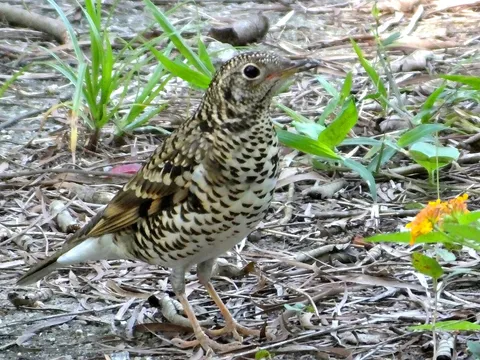
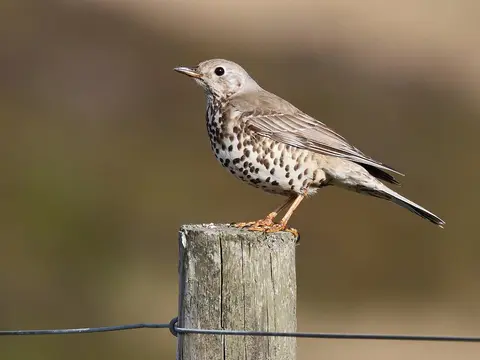
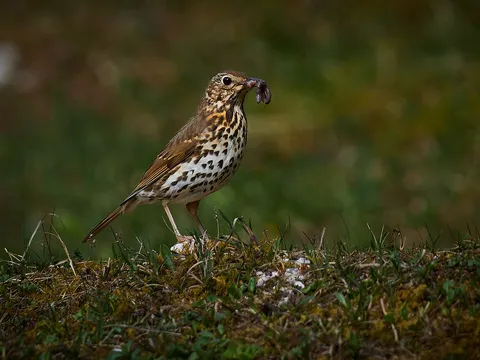
The Redwing has a plain brown back and pale underparts marked with dark spots. A creamy stripe runs above each eye, and rusty red shows along the flanks and under the wings, especially in flight. Females are paler than males, but both share this clear pattern.
On the ground, it searches for food with steady steps, sometimes switching to hops. Its song starts with soft, repeated whistles and ends in a brief trill; in flight, it gives a thin “Tseep” call. During migration and winter, Redwings gather in loose flocks, sometimes feeding alongside other thrushes.
It breeds in northern birch and conifer woods and tundra, and also turns up in city parks. Insects and earthworms make up much of its food, with rowan and hawthorn berries added in autumn and winter. Most migrate south for winter, reaching western, central and southern Europe, though some stay in their breeding range.
Where to find
-
During the breeding season in light city parks, listen for the Redwing's soft, repeated whistles near nests.
-
In light birch scrub with shrubs and young spruce, look for steady steps and short hops over the ground as it searches for worms and insects.
-
During autumn migration, listen after dark over parks and the city for thin contact calls from passing flocks.
-
In late autumn, check rowan trees in city parks for flocks feeding on berries; after a good crop, some may linger into winter near homes.