Shrikes · Perching birds
Brown Shrike
Link copied.
Lanius cristatus
Link copied.
Voice
Call
Call
How to recognize it
-
18 cm long
-
Brown back, long rounded tail
-
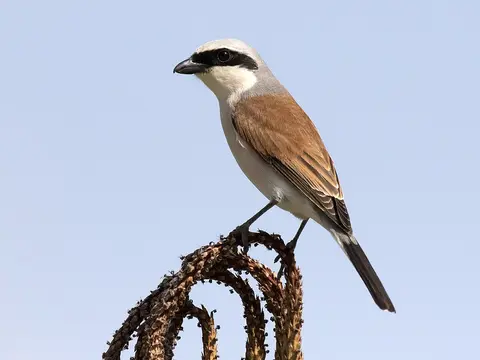
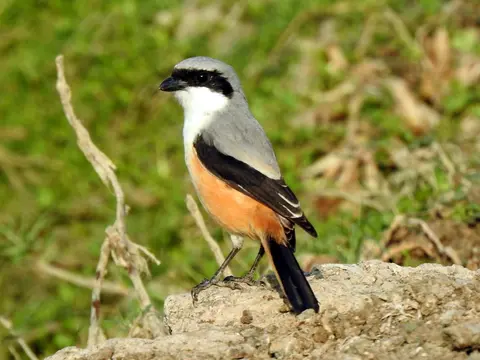
Black stripe through the eyes, white stripe above
-
Creamy-white underside, reddish flanks and belly
About the species
Brown above and creamy underneath, the Brown Shrike has a long, rounded tail and a dark band through the eye. A narrow white brow sits above the mask, while the flanks and belly are washed with rusty red. Its wings are plain brown, without pale patches. The mask can look paler in winter; females have fine scalloping below and a less sharply marked, dark-brown mask.
From the top of a thorny bush, it watches for prey, then drops to the ground to catch it. Its call is a loud chatter or rattle. On its wintering grounds, its quieter song can include imitations of other species’ calls, and its tail bobs as it sings; it also impales prey on thorns.
It breeds in varied settings, from taiga and forest to semi-desert, and also uses open scrub. Its food is mainly insects, especially moths and butterflies, with lizards taken now and then. After breeding in northern Asia, it migrates south to tropical Asia for winter, returning north in spring.
Where to find
-
Encounters are rare in Europe; in open scrub within its Asian range, the Brown Shrike perches on thorny bush tops, watching for prey before swooping down to the ground.
-
In late May or June, scan trees and bushes in taiga, forest, or semi-desert breeding habitat — nests are built in them.
-
In South Asian wintering areas, listen soon after arrival for loud chattering or rattling calls as winter territories are established.