Shrikes · Perching birds
Northern Shrike
Link copied.
Lanius borealis
Link copied.
How to recognize it
-
Larger than a sparrow
-
Large head, short rounded wings and a long, stepped tail
-
Brown upperparts, clear dark bars across breast and belly
-
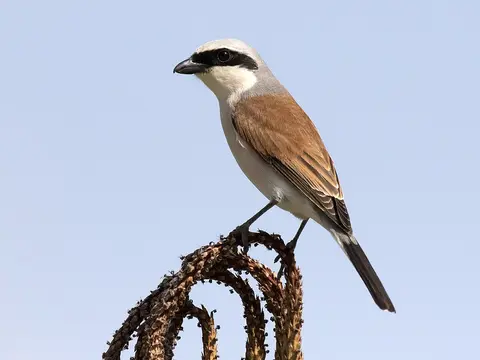
Often perches on a tall pole or branch, scanning for prey
About the species
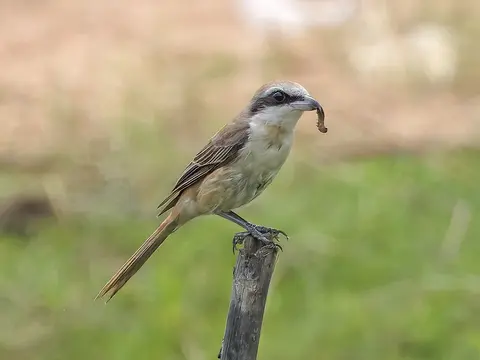
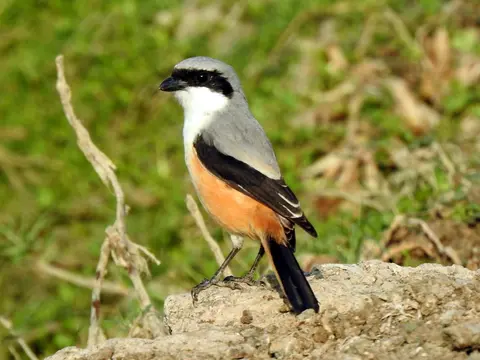
Brown upperparts are finely marked, with distinct dark bars across the chest and belly. Its large head ends in a hooked bill, while short, rounded wings lead into a long, graduated tail. The barring can be faint in some populations and stronger in others, so the pattern is not equally bold everywhere.
It watches from tall branches and poles, scanning for prey, and can imitate smaller songbirds' calls to lure them closer. Larger prey may be impaled on a thorn or a piece of wire, then torn apart with the bill.
It breeds along forest edges in northern taiga and tundra, wherever trees or shrubs are available. In winter, many move south into open country, including prairies, farmland, woodland edges and coastal marshes, though some stay in the breeding range. It feeds on insects and spiders, but will also take small songbirds, mammals and reptiles.
Where to find
-
At taiga and tundra edges in Siberia, scan trees and tall shrubs for nests — Northern Shrikes breed in these habitats.
-
On wintering grounds in open country — at forest edges, farmland or coastal marshes — check tall poles and branches for a still silhouette scanning for prey.
-
At a feeder, watch for a sudden lunge at finches or house sparrows — hunting them there has been observed.