Shrikes · Perching birds
Long-tailed Shrike
Link copied.
Lanius schach
Link copied.
How to recognize it
-
20–25 cm long
-
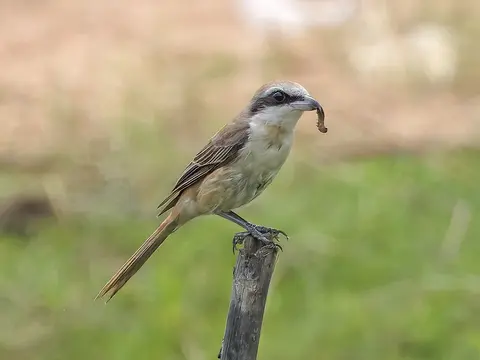
Long, narrow black tail
-
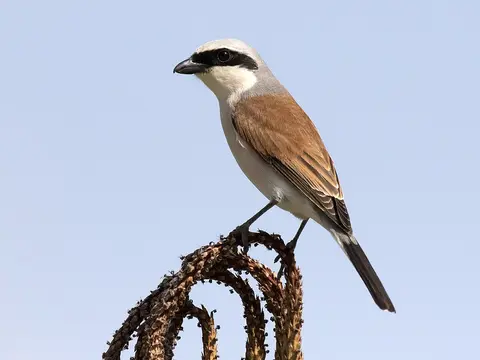
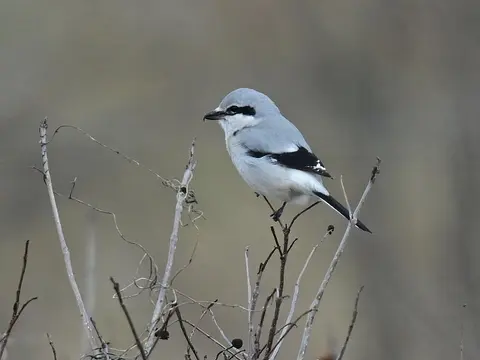
Black mask across the eye and forehead; whole head black in some subspecies
-
Rufous rump and flanks, small white shoulder patch
About the species
Across its Asian range, the Long-tailed Shrike varies in shade, but its plumage brings together gray, black, and warm rufous. A broad black mask runs over the eye and forehead, while a small white patch sits at the shoulder. Its long, narrow black tail and rusty rump and flanks remain useful clues even when the head is paler or darker.
From a bush or roadside wire, it sits upright, then glides down to seize prey, often from the ground. Its call is a harsh, grating scold, but its song can weave in calls of other species; it may also impale prey on a thorn after eating the head or brain.
Scrub, grassland, open farmland, gardens, and parks all suit it, especially where bushes or wires offer a perch. It takes large insects, lizards, small mammals, and small snakes, and may catch insects in flight. In temperate parts of Asia it moves south for winter, while tropical populations usually stay put, sometimes making shorter movements.
Where to find
-
In green city spaces in Central Asia during the breeding season, look high in trees for nests, which may be 4–12 metres above the ground.
-
Across open places with scrub — among meadows, steppe and cultivated land — watch the tops of bushes: the Long-tailed Shrike glides down from a prominent perch to catch prey.
-
In winter on roads in southern India, scan the roadside wires for a perched silhouette.