Pheasants and grouse · Gamebirds
Caucasian Grouse
Link copied.
Lyrurus mlokosiewiczi
Link copied.
How to recognize it
-
Male 50–55 cm; female 37–42 cm
-
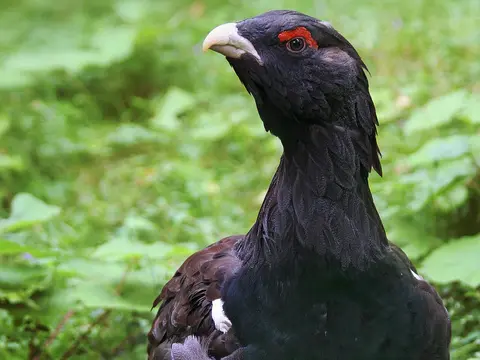
Male matte black with red eyebrows; female reddish-brown with dark barring
-
Male’s long tail deeply forked, lyre-shaped
-
In May–June, male leaps and turns during display; white flashes under the wing, with a thin whistle
About the species
The male is almost entirely matte black, with bright red eyebrows and a long tail that forks into two deep points. The female is mottled in subdued brown and gray, with dark barring. During courtship, a male’s leap can reveal a flash of white beneath his wings.
In May and June, males gather to display, springing into the air and turning. The display is nearly silent, with only a thin whistle as the wings beat; females give a cackling call and take sole responsibility for nesting and raising the chicks.
It stays year-round on open mountain slopes in the Caucasus and the Pontic Mountains, among low scrub near deciduous woodland. In summer it eats flowers, leaves, shoots, berries and insects; in winter, birch buds and catkins, berries and seeds.
Where to find
-
In May and June, on open mountain slopes among low rhododendron or other scrub, listen for a male's thin whistle as he leaps and flutters his wings.
-
In winter, watch low birch groves for Caucasian Grouse feeding on buds and catkins.
-
In summer, look among mountain thickets of rhododendron and rosehip for feeding on flowers and shoots of herbs, berries, and insects.